
















Hello, your privacy is important to us. Uniview websites use cookies to store info on your device and create the most secure and effective website . By continuing to use our websites, please accept the cookies could be stored on your device, which outlined our cookie policy and privacy policy .






_1036463_651984_0.png)





 X
X
 GLOBAL / ENGLISH


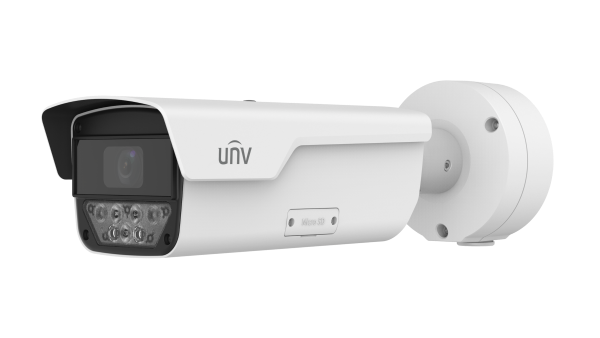
A night vision camera works in low light by collecting the little light there is, amplifying the useful signals in the images and suppressing noise, and by controlling exposure, contrast, and infrared illumination. In case of insufficient visible light, an infrared night vision camera uses IR light for illumination of the scene. The images are then recorded without the need for ordinary color illumination. Better sensor sensitivity is not everything. Lens aperture, shutter speed, IR range, image processing, distance to target, weather and installation angle all have an influence on the visibility in nighttime situations.
When setting up lights for a warehouse, industrial park, hotel or any outdoor perimeter, the objective of producing a bright image needs to be traded off against the task of retaining key information from any moved objects. This would include the direction and type of any vehicles, the color of clothing of any people, all entrance activity, and the location of any objects that have moved.
A low-light camera converts incoming light into an electrical signal through its image sensor. During the day, the sensor receives enough visible light to form a detailed color image. At night, the number of photons reaching the sensor decreases, so the camera must make several adjustments.
The main steps include:
1.The lens gathers available light.
2.The image sensor converts light into electronic signals.
3.The camera adjusts exposure according to scene brightness.
4.Digital processing reduces noise and improves contrast.
5.Infrared illumination activates when visible light is too weak.
6.The camera sends the processed video to an NVR or monitoring platform.
A larger aperture allows more light to reach the sensor, but it may reduce depth of field and increase lens cost. A longer exposure can brighten the image, but moving people or vehicles may appear blurred. Higher digital gain makes dark areas brighter, yet it can also amplify noise.
Nighttime imaging is therefore a balance between brightness, sharpness, motion control, and noise.
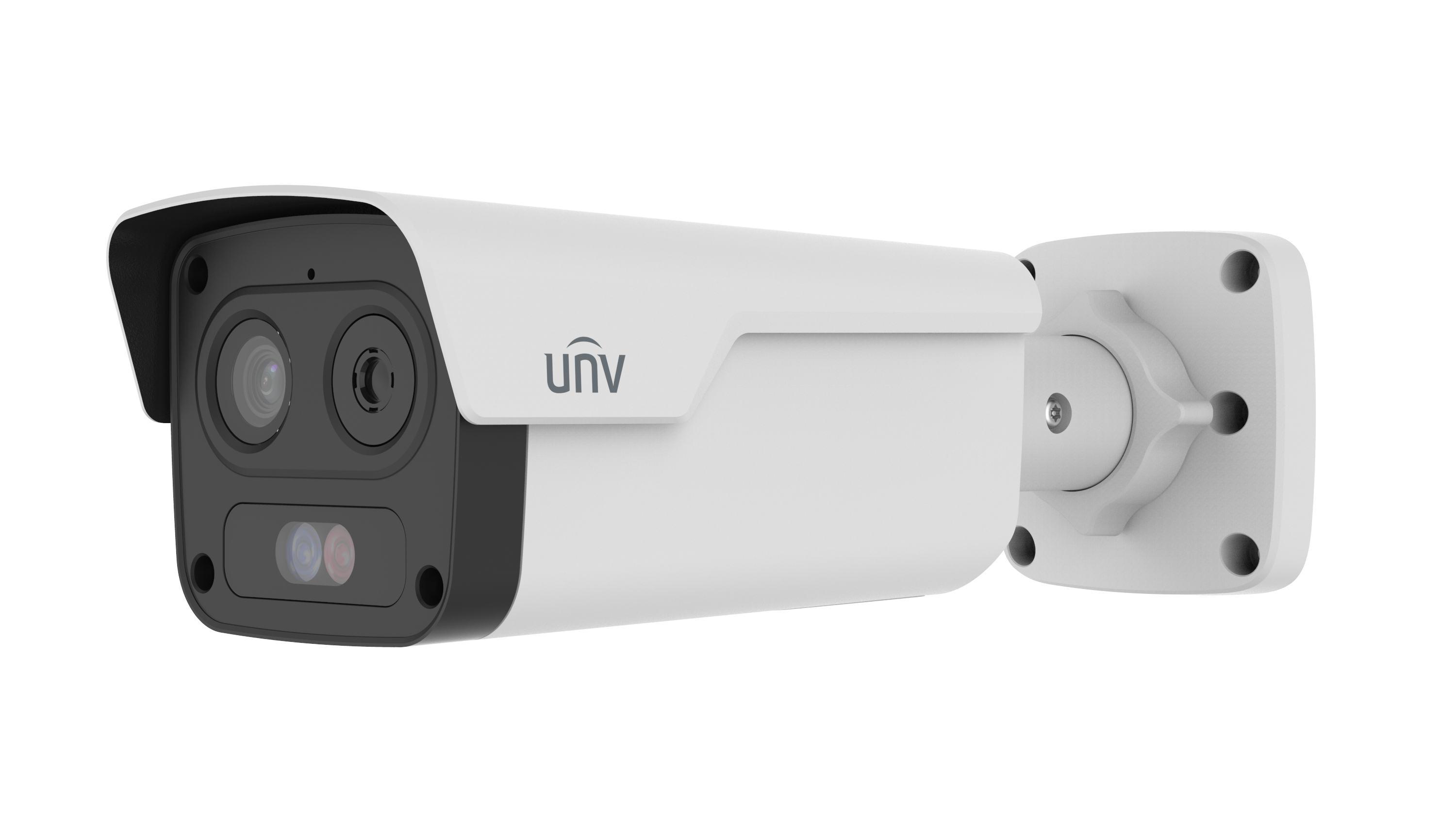
An infrared night vision camera uses IR LEDs or another infrared light source to illuminate the monitored area. Infrared light is outside the visible spectrum, so it can support surveillance without producing the same visible brightness as a white lamp.
The camera’s IR-cut filter usually changes according to the lighting condition. During the day, the filter helps maintain accurate color reproduction. At night, the camera may remove or adjust the filter so the sensor can receive infrared wavelengths.
The resulting image is commonly monochrome because the camera is measuring reflected infrared energy rather than separating visible red, green, and blue light.
Low-Light Method | Main Image Source | Typical Output | Main Limitation |
Higher sensor sensitivity | Available ambient light | Color or near-color image | Performance falls in very dark areas |
Longer exposure | More accumulated light over time | Brighter static scenes | Motion blur |
Digital gain | Electronic signal amplification | Brighter image | More visible noise |
Infrared illumination | Reflected IR energy | Usually monochrome image | Limited color information |
White-light supplement | Visible artificial light | Color image | Glare, disturbance, and extra lighting demand |
Advanced image processing | Improved use of sensor data | Better contrast and detail balance | Cannot restore information never captured |
The best method depends on the scene. A remote yard may need controlled IR illumination, while a hotel entrance may benefit from visible light and color imaging.
Low-light imaging becomes difficult because the sensor receives a weaker signal. When the camera increases gain, random variations in the signal become more visible as grain or color noise.
Noise reduction can make an image look cleaner, but excessive processing may remove fine details. A person’s clothing texture, a small object, or the edge of a vehicle may become blurred if the camera smooths the image too aggressively.
Motion creates another problem. If the shutter remains open for too long, a moving target leaves a blurred trace. Increasing shutter speed reduces blur but also reduces the amount of light collected. The camera must select a workable balance based on movement, brightness, and the importance of the scene.
Important nighttime checks include:
·Can a person walking across the frame remain identifiable?
·Do headlights wash out the entrance area?
·Does the camera preserve detail in dark corners?
·Is the image noisy after midnight when ambient light drops?
·Does IR reflection create a bright patch near the lens?
·Can the camera maintain useful exposure when rain or fog appears?
A camera that performs well on a motionless test object may produce weaker results when the scene includes movement.
Image signal processing determines how the camera turns raw sensor data into a viewable image. It manages exposure, highlights, shadows, noise, sharpness, color, and other image variables.
Wise-ISP technologyis used in Uniview’s low-light product development to improve image quality in difficult lighting environments. Its role is not to create light from nothing. Instead, image processing helps the camera use available sensor information more effectively.
A useful way to evaluate image processing is to observe several competing conditions at the same time:
·A dark background with a bright entrance light
·A moving person crossing a shadowed area
·Vehicle headlights pointing toward the camera
·Reflective floors, glass, or metal surfaces
·Uneven illumination across a wide outdoor scene
The result should be judged by practical detail rather than brightness alone. A very bright image with blown highlights may provide less evidence than a moderately bright image with controlled exposure.
The lens determines how much of the scene is visible and how large a target appears at a given distance. A wide-angle lens covers a broad area but distributes pixels across more background. A narrow-angle lens gives a closer view of a distant zone but may leave blind areas outside the viewing angle.
Nighttime lens selection should consider:
·Target distance
·Required identification detail
·Area width
·Mounting height
·Expected movement path
·IR beam coverage
·Backlight and reflective surfaces
Infrared range should also be matched with focal length. A camera may advertise a long IR distance, but that does not mean it can deliver identification-quality detail across the entire range. The lens must provide enough pixel density at the target location.
At a factory perimeter, a 50 m IR distance was used in an outdoor monitoring deployment, while PoE extension technology helped connect cameras installed along longer cable runs. This type of project still requires separate checks for lens coverage, network transmission, recording bandwidth, and nighttime image quality.
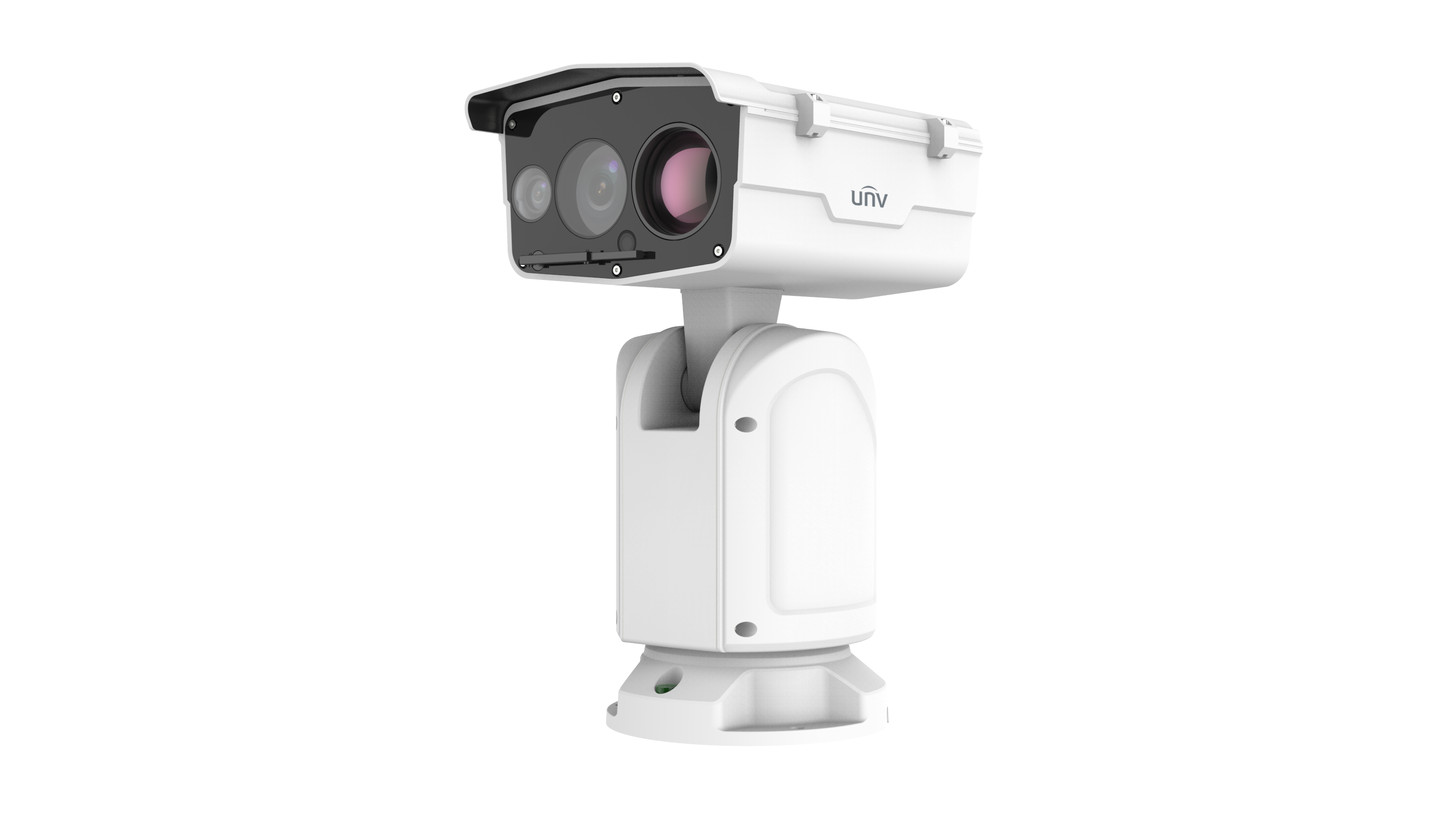
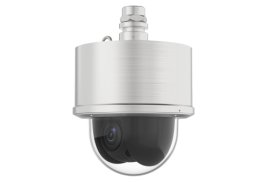
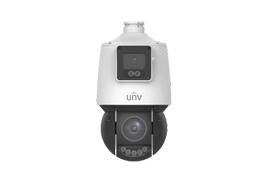
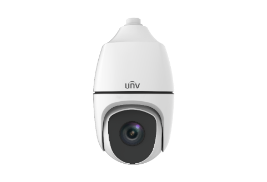
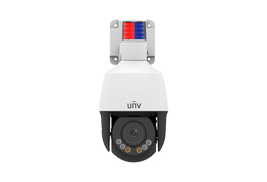
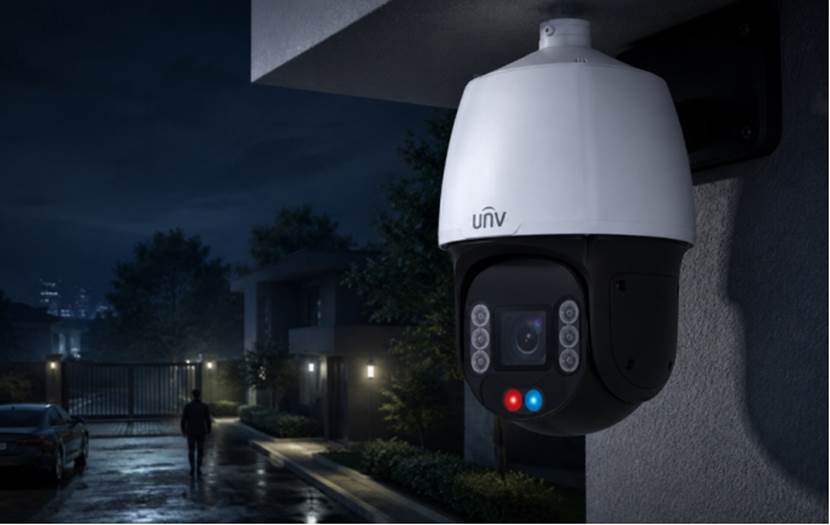
The IPC6624SFW-X33-C-VD2 Prime PTZ cameracombines 4MP imaging, Wise-ISP technology, IR capability, PTZ control, and active deterrence functions. The Prime PTZ series is available in 2MP, 4MP, and 8MP configurations, depending on the model.
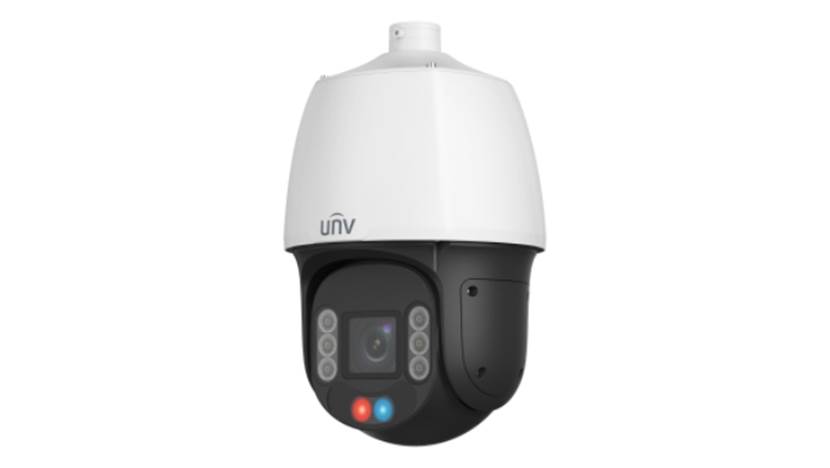
A PTZ camera is useful when one device must observe multiple zones, inspect a large perimeter, or respond to changing activity. Its movement allows operators to view different directions, but PTZ coverage has a clear limitation: when the camera turns toward one area, it is not continuously observing another area.
For this reason, a large site may combine PTZ cameras with fixed cameras. A PTZ camera can provide flexible verification, while fixed cameras maintain constant views of gates, loading areas, doors, or restricted access points.
The SFW series also supports customizable audio and visual alarms. Outdoor protection options include IP67 and IK10, with NEMA 4X available for applicable configurations. The final specification should match the installation environment and confirmed product configuration.
Walls, glass, metal panels, and wet pavement can reflect infrared light back toward the lens. The center of the image may become overexposed while the surrounding area remains dark.
Move the camera away from the reflective surface, change the angle, or adjust the IR direction before increasing gain. More illumination does not always solve the problem.
A camera installed directly toward a vehicle entrance may face headlights every night. Without suitable exposure control, the headlights can hide the vehicle body and the person standing nearby.
Test the camera with real vehicles at different approach angles. A daytime test cannot reveal this failure mode.
Water droplets and airborne particles scatter infrared light. This can create a bright haze and reduce contrast. The camera should be tested during the site’s typical weather conditions, especially when the monitored area is near roads, construction zones, or open storage yards.
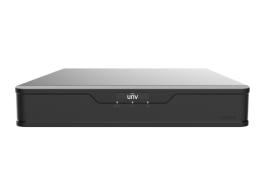
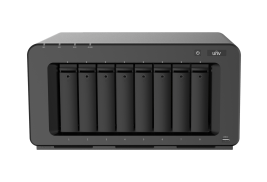
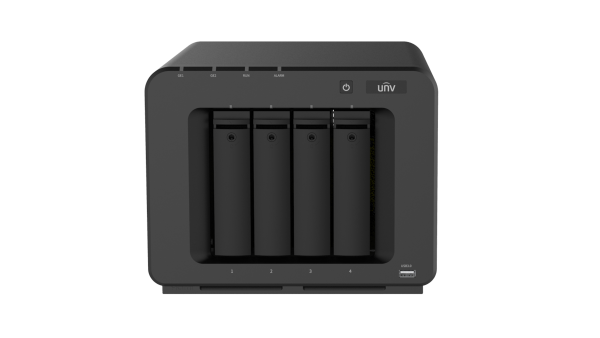
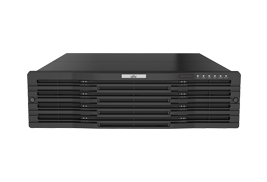
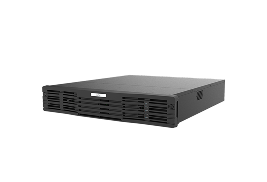
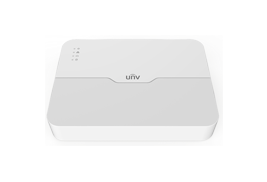
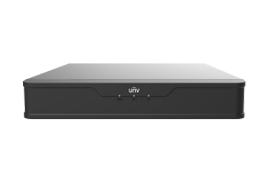
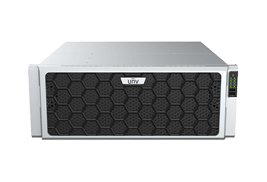
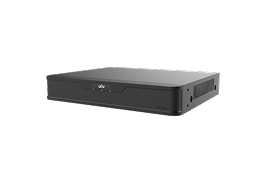
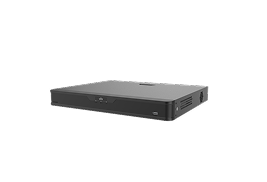
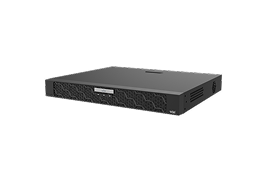
Higher resolution and longer retention increase storage requirements. A complete design should match camera resolution, frame rate, codec, motion recording, and NVR capacity. Uniview NVR systemscan be selected as part of the recording architecture, but storage calculations should still be completed for the actual number of cameras and retention period.
A practical night test should cover the full operating period rather than only the first hour after sunset.
Check the camera at:
·Early evening with mixed daylight and artificial light
·Late night when ambient light is lowest
·Vehicle approach and departure
·Normal walking speed
·Different target distances
·Wet or reflective ground
·The intended NVR recording mode
·Remote viewing through the chosen management platform
Record both the live image and the stored playback. Compression, network limits, or NVR settings can change the final recorded result.
The Uniview network camera rangeincludes camera options for different monitoring environments. Uniview has supplied IP cameras, NVRs, and integrated systems for factories, warehouses, hotels, malls, and industrial parks. Its product and solution ecosystem allows project teams to combine fixed cameras, PTZ cameras, storage, and management tools according to site conditions.
A night vision camera works well when its sensor, lens, illumination, processing, installation position, and recording system are designed together. Infrared technology supports monitoring in darkness, while low-light image processing helps preserve usable details under uneven illumination. The final decision should come from nighttime testing at the actual location, not from daytime images or a single brightness specification.
An infrared night vision camera can operate in very dark conditions because it uses infrared illumination. A full color low-light camera normally needs some visible light to maintain color information. The required light level depends on the sensor, lens, processing system, and selected operating mode.
Blur usually comes from slow shutter speed, moving targets, incorrect focus, vibration, insufficient illumination, or excessive noise reduction. Check motion performance at the actual monitoring distance instead of judging the image from a stationary object.
The usable distance depends on IR output, lens focal length, target reflectivity, weather, mounting angle, and the level of detail required. Detection distance, recognition distance, and identification distance are not the same. A site test should confirm the result at the intended target position.