











Hello, your privacy is important to us. Uniview websites use cookies to store info on your device and create the most secure and effective website . By continuing to use our websites, please accept the cookies could be stored on your device, which outlined our cookie policy and privacy policy .


_1036463_651984_0.png)





 X
 GLOBAL / ENGLISH


An outdoor night vision camera system for 24/7 monitoring is more than a dark shoot camera. It is a system of parts that can function in harsh weather, heat, and even the loss of a network connection. A good outdoor security camera solution consists of a dark shoot capable camera, weather resistant housing, and sufficient data storage to hold recorded footage. Here we outline what you will need, key parts that you can compare, and check list of items that you should verify before you commit to your outdoor security camera system.
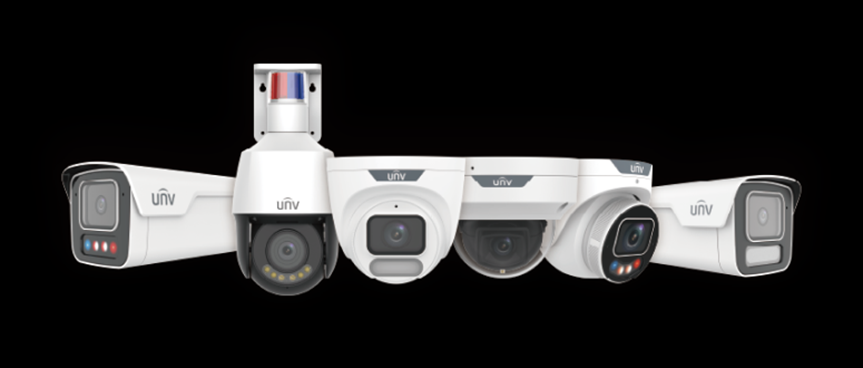
l Match the sensor and aperture to your darkest site before adding resolution. A 1/1.8-inch sensor with a wide aperture delivers usable color at about 0.0005 lux, far below the level where a standard camera turns black.
l Protection ratings: This is what keeps your outdoor camera working. Look for IP67 and IK10 ratings as well as an appropriate operating temperature range for your location. In really cold locations, this may extend down to -40 °C.
l Storage must survive the network. Automatically recreate the network and continue to record on local microSD if the link to the recorder is lost.
l Reduce false alarms at the camera. Smart intrusion prevention that classifies people and vehicles to only send relevant events to the operator.
Indoor cameras have steady lighting and climate. Outdoor cameras on the other hand have to deal with near darkness for half the day, rain and dust, temperature extremes, and the distance to a power outlet and data connection. A solution rated for continuous outdoor use deals with all these challenges and not just night vision.
There are two ways to obtain a reasonable night image: One way is to gather ambient light: A large image sensor + a wide aperture allows to record color images at very low light and without additional lighting. The second approach is to add lighting: Infrared LEDs or warm-white LEDs are switched on to increase the range where still enough detail is visible. Modern low-light cameras are designed to combine both approaches: They record images with as much color as possible in low light and switch to additional lighting as the ambient light decreases.
An outdoor security camera is only as durable as its housing. IP67 keeps it sealed against dust and temporary water immersion; IK10 resists deliberate physical impact; and a wide operating range, down to -40 °C, keeps it working through a cold winter. A metal or graphene front cover also helps shed heat, which matters in full summer sun.
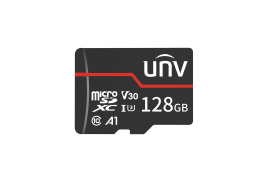
Storing footage is the only good that a camera brings in outdoor projects. So, automatically rebuilding a network (ANR) and having a local microSD slot in the camera are very important. If the connection to a recorder is lost, the camera will continue to record to its local card and then transfer the missing footage to the NVR once the connection comes back online.
Optimizing the resolution is the last step. The size of the sensor and the speed of the lens determine whether a sufficient amount of light has been captured to produce a clear image. The pixels only add more detail to the image that is already being formed by the sensor. A 1/1.8-inch sensor captures about 180% more light than a 1/2.8-inch sensor. In low-light situations, lines often specify the size of the sensor and the f-number first.
Infrared and warm-light range tell you how far the camera can illuminate, not how far you can resolve detail. A 40 m illuminator does not mean a person is identifiable at 40 m. Use the DORI figures, which separate detection, observation, recognition, and identification distance, to match the lens to the distance you must actually resolve.
Perimeter and gate scenes are often high-contrast: bright sky or open ground behind a dark foreground. WDR blends the highlights and shadows into one readable frame. A 130 dB true WDR rating is well suited to backlit entrances, where a standard camera would blow out the bright side and black out the dark side.
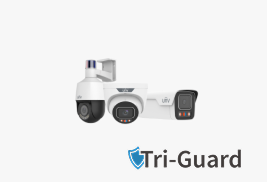
A camera that only records asks someone to watch the footage afterward. Cameras with active deterrence respond in the moment, using light and audio cues plus alarm outputs to discourage an intrusion before it develops. The Tri-Guard 2.0 line pairs this deterrence with intrusion logic for perimeter use.
With leaves, animals and passing light causing frequent motion alarms, the smart intrusion prevention classifies the detected person, vehicle or non-motor vehicle and filters out the rest, enabling the operator to be alerted in case of relevant events only and thus saving a lot of time for 24/7 monitored sites.
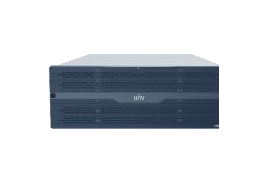
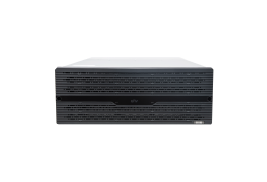
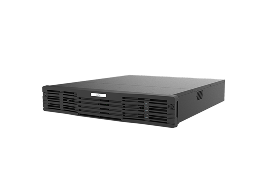
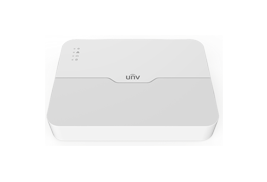
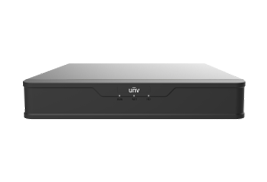
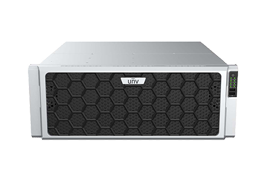
The camera is the front end; the solution is the whole chain. Uniview's UNV Ultimate Night Security Solution pairs low-light front-end cameras with NVRs and video-management software so footage is recorded, indexed, and retrievable. Pairing a night-capable camera with an NVR that supports ANR, RAID, and long retention is what turns individual cameras into a dependable 24/7 system.
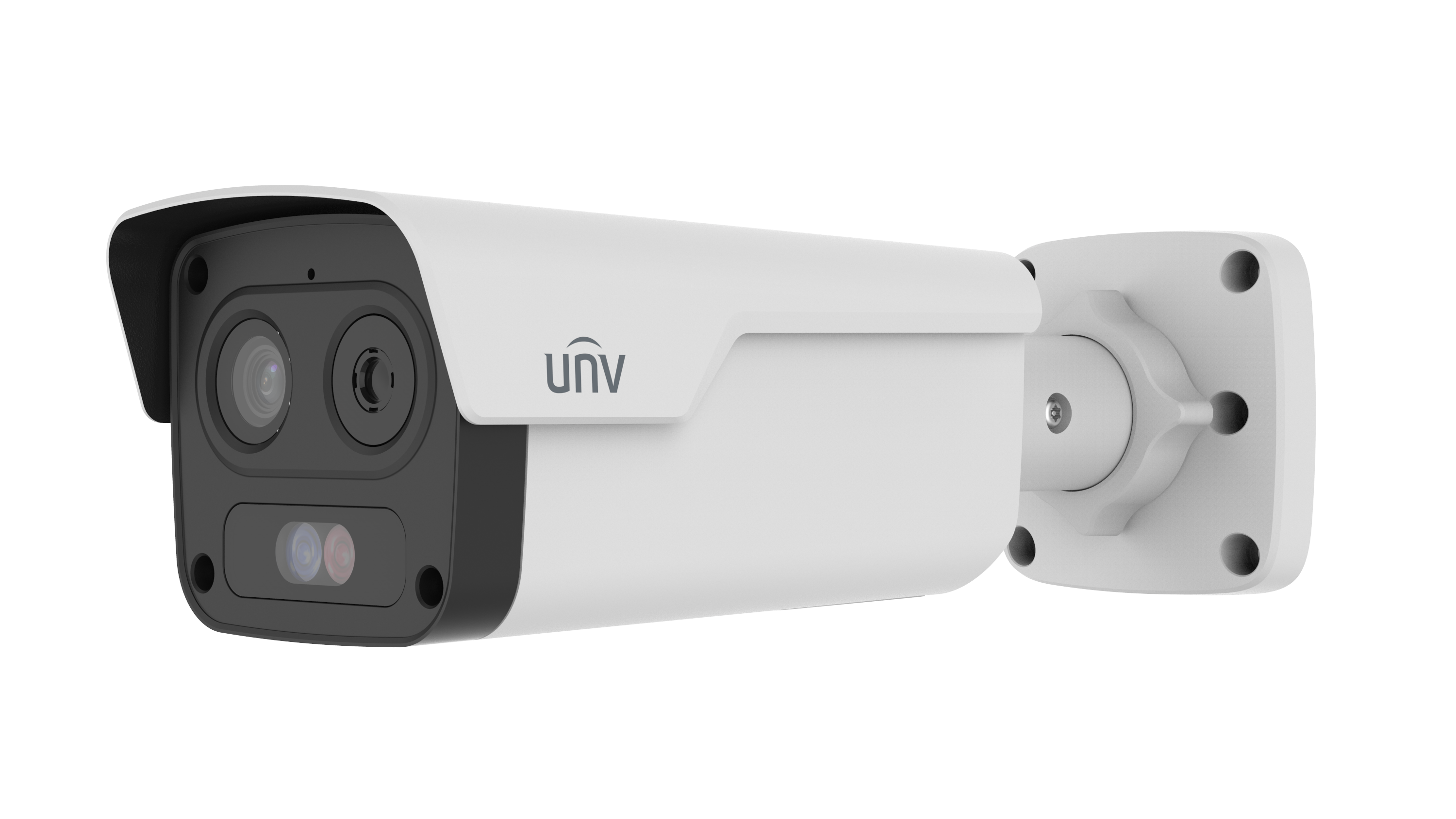
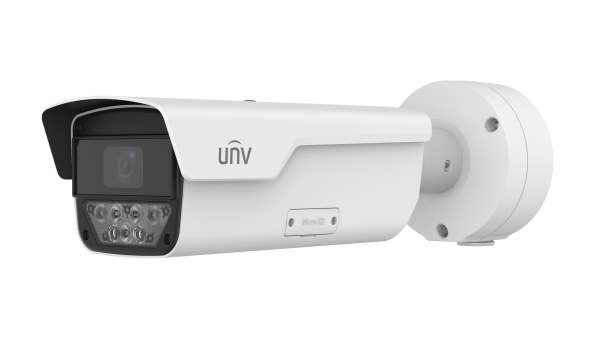
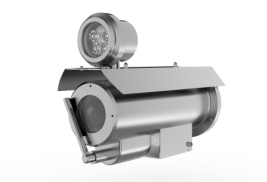
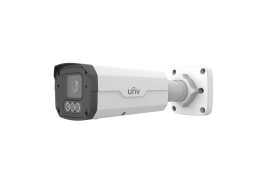
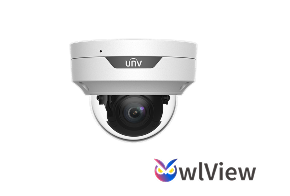
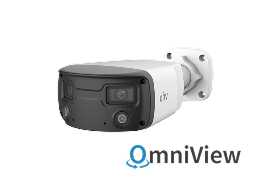
The UNV Owlview series IPC2B18SE-ADZKMC-WP-I1 is a good reference point for what a project-grade outdoor night vision camera looks like. It is an 8MP (3840 × 2160) dual-light bullet built on a 1/1.8-inch sensor with an F1.2 lens, producing color at a minimum of 0.0005 lux. It pairs 130 dB true WDR with 40 m infrared and 40 m warm-light range, and a 2.8-12 mm motorized lens for flexible framing.
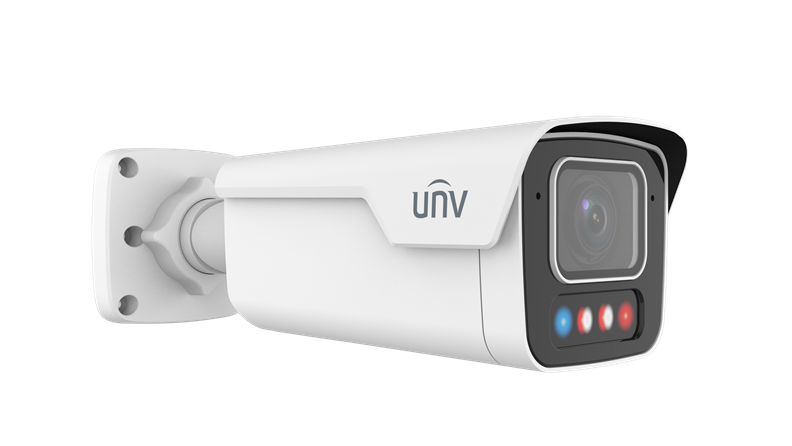
In terms of durability this offers IP67 and IK10 impact resistance, with a working temperature range of -40 °C to 60 °C. Powered via PoE at up to 7 W it integrates with smart intrusion detection that includes color information, people-counting, and audio detection, compatible with ONVIF enabled NVRs / VMS software.
Mounting height changes effective range. The higher up a camera is mounted the wider the view and less detail will be observed. The distance to the center of the beam as specified in the spec sheet for an illuminator must be verified with a short site test to ensure that the target is indeed within the beam and that the chosen lens will provide sufficient detail at that distance.
Understand how outdoor runs can fail in unglamorous ways: verify Poe reach and surge protection for long runs, defogging and heating for damp or cold locations, and verify that ANR is enabled so a brief loss of link does not result in silent loss of footage.
Before you quote a project check all the details against the site conditions:
l Sensor size and aperture, and the minimum color illumination your darkest hour requires
l Infrared and warm-light range versus the DORI distance you must resolve.
l WDR level for any backlit gate, entrance, or open-ground scene
l IP rating, IK rating, and operating temperature range for your climate.
Storage: Number of NVR channels, RAID, Data Retention, and ANR. Local storage on microSD.
l PoE support, maximum power draw, and surge protection for the cabling run.
l ONVIF profile support for integration with recorders and VMS systems already in place.
Where a specific figure hasn’t been confirmed for your site, treat that as a verification exercise – a short trial to confirm the effective detection range at your chosen mounting height.
Illuminator range and recognizable detail are different. A 40 m infrared or warm-light range means the scene is lit out to 40 m; how far you can identify a target depends on resolution, lens, and DORI. Confirm identification distance for your mounting height rather than relying on the IR figure.
Infrared is discreet and good for unobtrusive recording; warm light adds visible deterrence and extends color range. Dual-light cameras, like the IPC2B18SE, let you choose the mode, which suits perimeters where you want both a clear image and an active deterrent.
Yes, if it has ANR and local storage. The camera writes to its microSD during the outage and backfills the gap to the NVR once the link returns, so a short network interruption does not create a hole in the footage.
Founded in 2011, Uniview is a global full-stack AIoT solutions provider empowered by core ABCI technologies. With a global layout and multi-brand strategy, it operates four professional brands including UNV, uniarch, Hopetrek and youkey, covering full-scenario demands of professional security, SMB security, smart new energy and smart home.

2026-10-16
Topic:

2026-10-13
Topic:

2026-10-13
Topic:


