



























Hello, your privacy is important to us. Uniview websites use cookies to store info on your device and create the most secure and effective website . By continuing to use our websites, please accept the cookies could be stored on your device, which outlined our cookie policy and privacy policy .






_1036463_651984_0.png)








 X
X
 GLOBAL / ENGLISH


Outdoor security systems often fail right when you need them most. Constant notifications triggered by the wrong elements reduce the reliability of the entire system. When a phone buzzes at midnight because a stray cat ran across the yard, the frustration builds up quickly.
Selecting the right technology directly influences whether your property remains safe or if guards suffer from alarm fatigue. This guide explores the core differences between traditional sensors and modern AI Motion Detection, detailing how intelligent IoT technologies and robust hardware can practically eliminate false alarms to build a safer monitoring ecosystem.
Older surveillance equipment fundamentally operates on basic movement tracking rather than intelligent target recognition. Looking closely at why traditional setups fail helps clarify the necessity of modern upgrades.
Passive infrared (PIR) sensors heavily rely on basic thermal shifts to detect movement. The system triggers an alert when a heat signature crosses the monitored zone. This mechanism offers an affordable way to track motion but completely lacks the ability to classify what is actually moving across the screen.
These outdated sensors cannot tell the difference between a falling leaf and an actual intruder, making them a major source of frustration for property owners. In outdoor settings, thermal variations constantly change. A sun-baked driveway or a sudden cold gust of wind alters the background temperature, confusing the sensor and causing it to record meaningless footage.
Swaying branches, passing insects, and sudden light shifts consistently trigger irrelevant alerts. Frequent false alarms lead to alarm fatigue, causing property owners and security guards to eventually ignore actual threats. When operators receive fifty notifications a night for wind blowing through trees, they stop paying attention, which entirely defeats the purpose of having a camera installed.
The industry moved past simple pixel-based motion tracking into deep-learning-driven target recognition. Rather than just seeing movement, the camera now processes what is actually moving, fundamentally changing how alerts are generated and dispatched.
Modern surveillance equipment classifies targets by extracting specific attributes from the video feed. The algorithms can accurately detect up to 120 targets simultaneously. The cameras focus on identifying humans, motorized vehicles, and non-motorized vehicles while ignoring animals and random debris.
Advanced detection frameworks fundamentally change how cameras process movement. Smart Intrusion Prevention (SIP) significantly cuts down false alarms in outdoor environments. The algorithms filter out irrelevant movements from wind, rain, and leaves, focusing only on real threats. By locking onto distinct shapes rather than mere motion, SIP acts as a highly capable digital gatekeeper for your property.
Security operators establish virtual perimeters using cross line detection, intrusion detection, enter area detection, and leave area detection. Combined with false alarm filtering capabilities, these analytics deliver highly precise perimeter defense.
Deciding between PIR and intelligent systems comes down to measuring accuracy against deployment conditions. An objective look at how each handles real-world interference reveals exactly why modern installations favor intelligent video algorithms.
Feature Category | Traditional PIR Sensors | Intelligent Video Analytics |
Detection Method | Basic thermal shifts | Attribute extraction and classification |
Accuracy Rate | Low (Susceptible to environment) | 90%+ detection rate for valid targets |
Weather Response | Fails in extreme temperature shifts | 120dB WDR for sharp contrast lighting |
Traditional systems struggle outdoors, but intelligent setups feature a 90%+ detection rate for valid targets. The Ultra Motion Detection technique detects humans and vehicles in an image and sends alarms only when a true threat appears.
A 120dB WDR adapts to sharp contrast areas between the light and dark. Some advanced cameras feature 130dB WDR with auto scene match to adjust parameters automatically without manual adjustment. This outpaces traditional PIR sensors that fail during severe weather or direct sunlight.
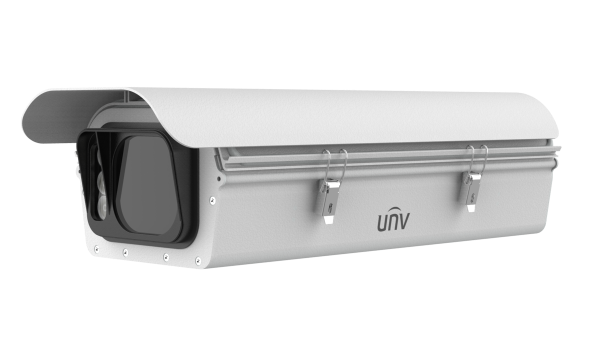
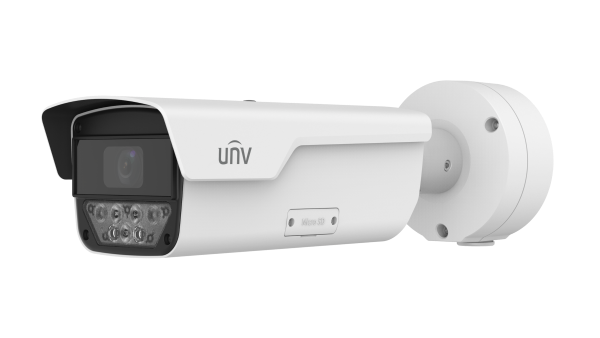
Environmental damage directly influences camera reliability. Professional exterior and hardware design protect the processing chips. Equipment featuring IP67 water and dust proofing alongside IK10 vandal-proof ratings stands up to harsh conditions. A stable lens housing keeps the algorithms working properly without water spots or cracked glass triggering the motion sensors.
Hardware design and active defense mechanisms play a major role in a functional security layout. AI Motion Detection pushes the boundary from passive recording to active property defense. Selecting the right physical device dictates the success of the software algorithms inside.
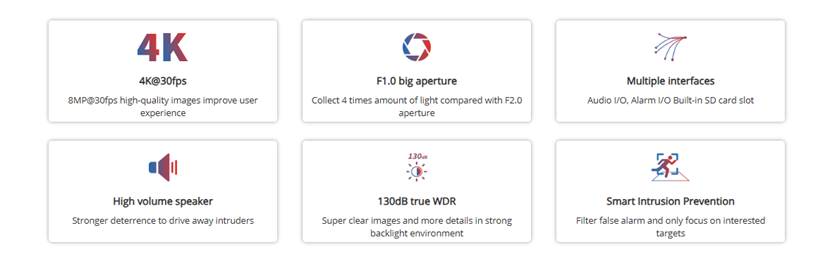
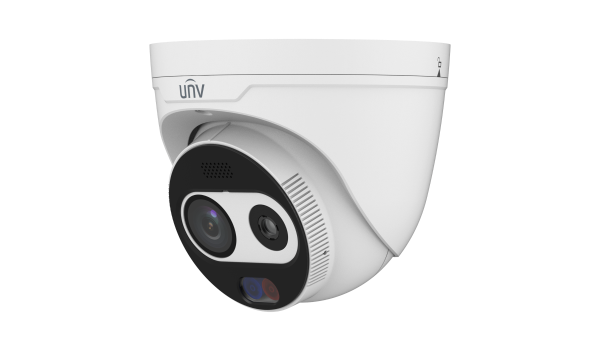
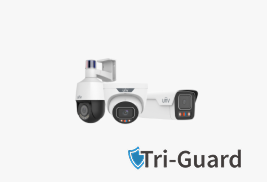
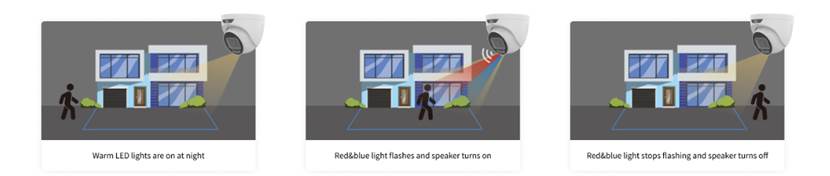
When SIP identifies a person or vehicle, systems utilizing Tri-Guard 2.0 trigger immediate audio and visual alarms. This active deterrence stops intruders before they cause damage. A sudden flash of light paired with a loud siren usually sends trespassers running before they even get close to the building.
Intelligent systems accurately detect humans and vehicles using intrusion and crossline detection. If a dog wanders into a restricted zone, the system stays quiet, but if a delivery truck pulls up, it logs the event accurately. This drastically reduces the time guards spend verifying alerts.
Day or night, the system accurately identifies humans, motor vehicles, and non-motor vehicles while recording target colors for easy back-end retrieval. Security personnel can search for specific attributes, skipping hours of irrelevant footage to locate an incident fast.
Even top-tier equipment fails if installed poorly. Proper physical placement and software configuration eliminate the final remaining triggers for false alarms.
Mount cameras high enough to prevent physical tampering but low enough to capture clear target attributes. Pointing a camera directly at the ground or straight at the sky confuses the internal analytics. For long, narrow spaces like hallways, you can utilize the 9:16 corridor mode to improve the image efficiency.
Remove swaying branches and spider webs near the lens. Physical clearance around the camera housing stops false triggers caused by things blowing directly across the lens.
Configure specific Regions of Interest (ROI) within the management platform. By applying higher quality encoding to critical areas while lowering detail in less important ones, ROI helps improve bandwidth efficiency. Drawing accurate virtual fences physically blocks out street edges or busy sidewalks from triggering the system.
Moving from individual camera setup to a complete, reliable security network requires a trusted global manufacturer. A unified ecosystem brings all these intelligent features into one manageable interface.
As a global provider of AIoT products, Unlimited New View operates with a presence in over 200 countries and regions. With over 14 years of unlimited exploration, the brand endeavors to build a safer world based on professionalism and reliability. You can dive into the company’s profile to explore the robust manufacturing foundation that powers these devices.
From retail chains to industrial parks, complete solutions incorporate advanced Technology to deliver low total costs of ownership. Professional Solutions by Industry successfully cover transportation hubs, commercial centers, healthcare facilities, and retail chains.
Security installers seeking mutual growth can join the Dealer Partner Program. This initiative offers four membership levels based on annual purchases: Certified, Silver, Gold, and Platinum. It features a strict MSRP structure to maintain a healthy margin for integrators working on local projects. Upgrading to AI Motion Detection systems creates stable local markets where both the manufacturer and the dealer succeed together.
Q1: Why do traditional outdoor motion sensors trigger false alarms?
A: They rely heavily on simple pixel changes or basic thermal shifts, meaning moving leaves, heavy rain, or passing insects easily set them off.
Q2: How does Smart Intrusion Prevention reduce unnecessary alerts?
A: Smart Intrusion Prevention filters out environmental noise and accurately classifies humans, motorized vehicles, and non-motorized vehicles to ignore random movements.
Q3: What makes AI Motion Detection different from basic PIR?
A: Instead of just sensing heat, intelligent algorithms analyze shapes and attributes. The system can accurately detect up to 120 targets simultaneously and ignores animals and random debris.
Q4: What hardware rating is required for outdoor cameras?
A: Outdoor equipment should feature IP67 ratings for water and dust resistance, and IK10 ratings for vandal protection to maintain stable performance during storms.
Q5: Can I configure specific monitoring areas on my screen?
A: Yes, security operators establish virtual perimeters using cross line detection, intrusion detection, enter area detection, and leave area detection to focus only on real threats.