




















Hello, your privacy is important to us. Uniview websites use cookies to store info on your device and create the most secure and effective website . By continuing to use our websites, please accept the cookies could be stored on your device, which outlined our cookie policy and privacy policy .






_1036463_651984_0.png)








 X
X
 GLOBAL / ENGLISH


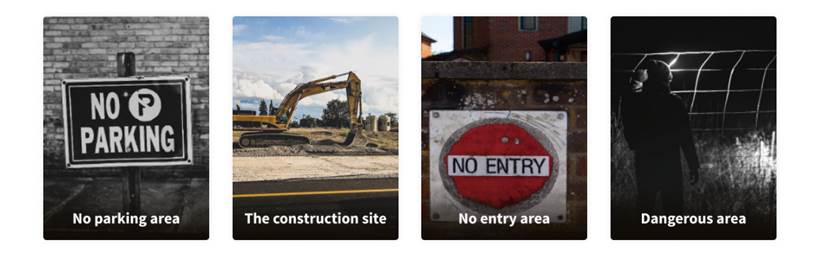
Outdoor CCTV security is no longer only about recording movement. For business sites, warehouses, parking lots, schools, retail back doors, and perimeter areas, the real question is timing. Should a camera send a motion alert first so staff can review the event, or should it warn the person on-site before the event gets worse?
The better answer depends on risk level, response speed, night visibility, and false alarm control. A camera that warns too often can become annoying. A camera that only sends alerts may react too late. A practical outdoor CCTV camera should match the response to the event, not treat every movement the same.
Both functions start with motion detection, but they serve different jobs. Motion alerts help people know that something happened. Active deterrence tries to change what happens next.
Motion alerts are mainly used for notification, review, and event search. When movement is detected, the system can send an app alert, mark the recording, or send the event to a video platform. IP cameras are commonly used with NVRs, mobile apps, and local storage, which makes alerts useful for later review and daily operation.
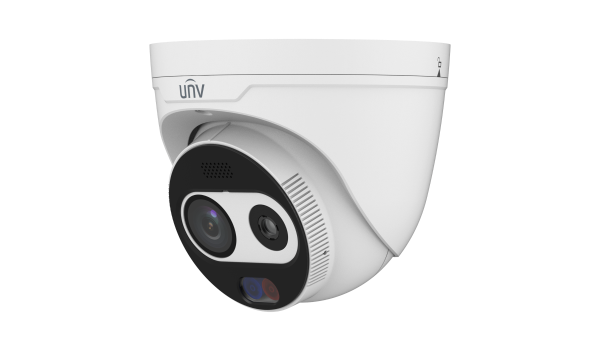
Active deterrence adds a visible or audible response at the site. Instead of waiting for a person to check the alert, the camera can use warning light or sound to make the event noticeable immediately. This is why Tri-Guard_2.0 is a stronger fit for outdoor areas where delay is costly.
The decision is not “which feature is better.” It is “which feature should happen first.” Motion alerts are better for review and low-risk events. Active deterrence is better when a fast on-site warning can prevent loss, damage, or unauthorized entry.
A camera should not trigger sound and light for every movement. In public-facing or mixed-use areas, too much warning can bother staff, customers, tenants, or nearby residents.
Retail entrances, school walkways, apartment paths, and open parking areas often have normal movement after hours. In these places, an alert-first setup is safer. Staff can check the event before any warning is triggered.
Some events are not dangerous but still worth recording. A delivery vehicle stopping near a gate, a worker entering late, or a short parking event may need a record rather than a loud response. Motion alerts support that kind of measured workflow.
For disputes, vehicle scratches, missing goods, or unusual activity near a loading dock, clear recording may matter more than instant warning. A good outdoor CCTV camera should keep usable video, not just make noise. NVR support, event search, and app playback help make the review process less painful.
Active deterrence should come first when the site risk is clear, the area is restricted, and staff may not respond fast enough. This is common in night-time outdoor security.
Warehouses, factories, logistics yards, and equipment zones often have hard boundaries. If movement crosses a defined line or enters a protected zone after closing, waiting for manual review can be too slow. A camera using Tri-Guard_2.0 can support a more immediate response.
Night events create two problems at once: detection and confirmation. Low light, headlights, rain, and shadow changes can make an alert hard to judge. Product information in the knowledge base notes technologies such as LightHunter, ColorHunter, Wise-ISP, WDR, and smart intrusion functions across the camera portfolio, all aimed at better image quality and event handling in difficult scenes.
Construction materials, parked vehicles, fuel storage, outdoor tools, and loading areas are usually exposed. If no guard is close by, the camera should not only notify the back office. It should also make the event obvious at the site.
Outdoor Situation | Better First Response | Reason |
Public walkway with normal traffic | Motion Alert | Lower disturbance, easier manual review |
Warehouse perimeter after hours | Active Deterrence | Faster warning before entry gets worse |
Parking lot with frequent cars | Motion Alert First | Reduces unnecessary warning events |
Equipment yard at night | Active Deterrence | Higher asset risk and slower human response |
Loading bay during working hours | Motion Alert | Staff can verify nearby movement |
The biggest concern with active deterrence is not the warning itself. It is bad triggering. A siren or warning light that reacts to rain, insects, tree movement, or passing headlights will quickly lose value.
The knowledge base describes Ultra Motion Detection as a method that sends alarms only when person or vehicle events are detected, with 20m+ detection distance and a 90%+ detection rate in the listed product material. That kind of filtering matters before any audible warning is used.
Outdoor security works better when the camera reacts to rules, not simple movement. Cross line detection and intrusion detection help define what matters: crossing a gate line, entering a fenced zone, or moving into a restricted loading area.
A front entrance may need alerts only. A rear fence may need immediate warning. A parking lot may need event recording during the day and stronger response at night. This layered logic is more practical than one setting for the whole site.
A camera selected for this topic should not only detect motion. It should combine clear images, reliable trigger logic, and visible response in one outdoor-ready unit.
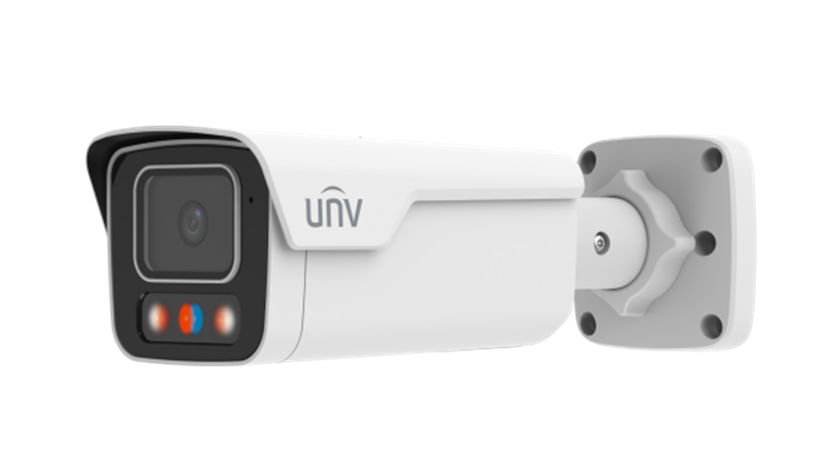
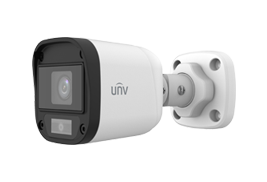
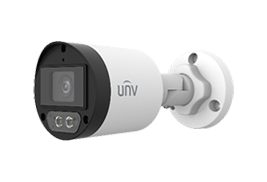
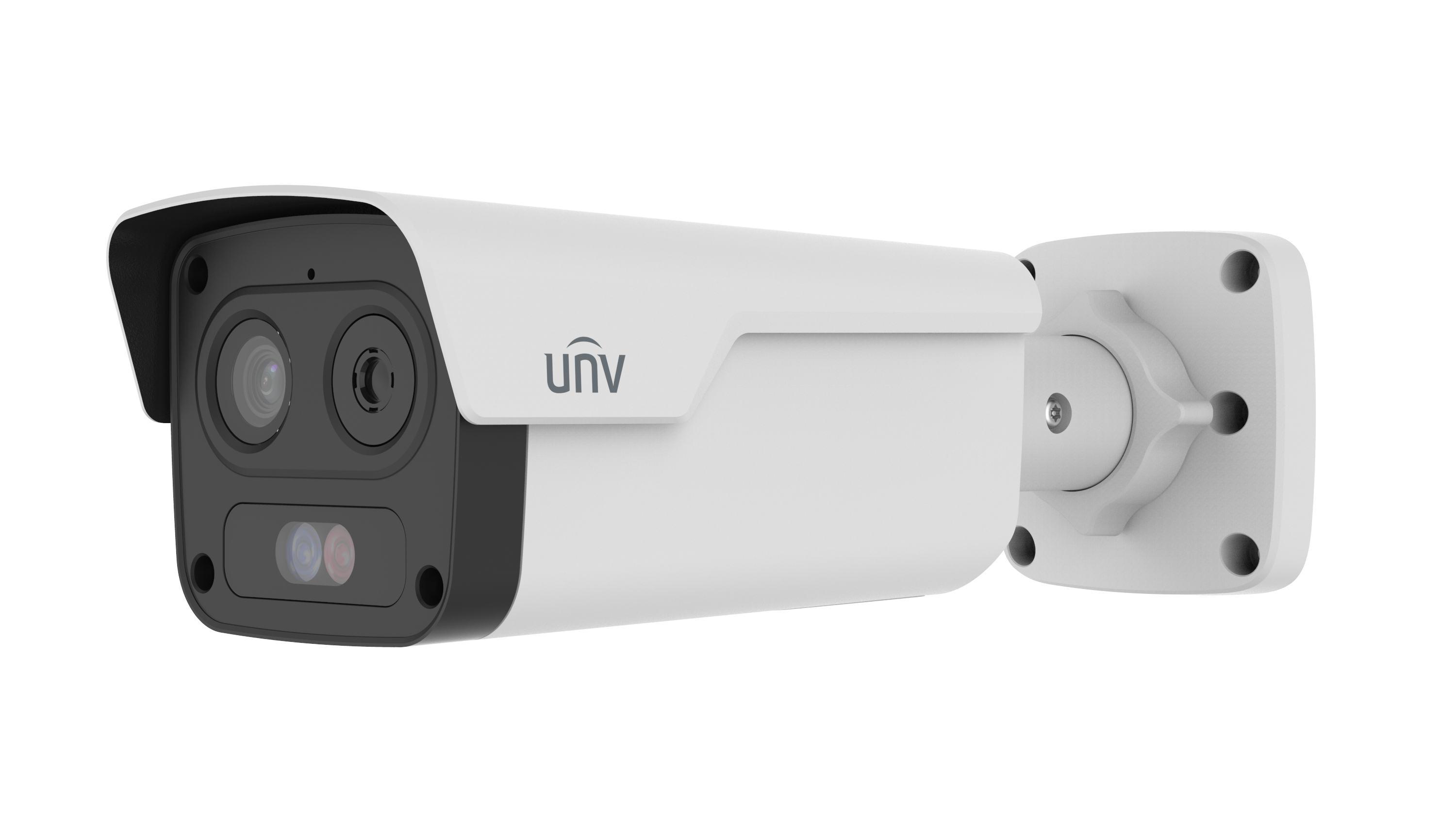
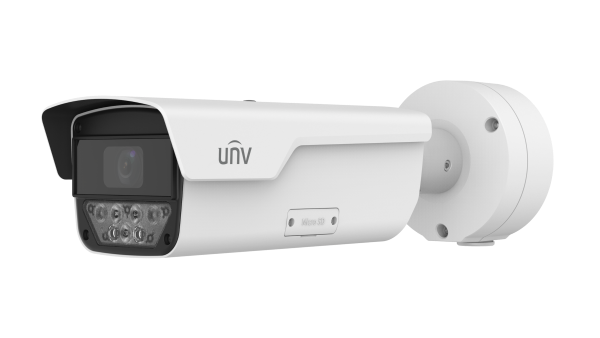
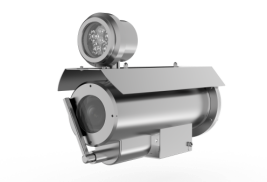
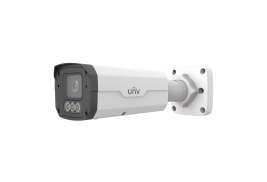
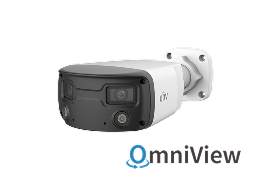
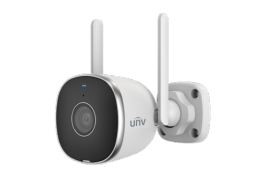
The IPC2B14SS-ADF28(40)KMC-I1 is positioned as a 4MP Tri-Guard fixed dual-light bullet network camera. For sites that need outdoor warning, dual-light design helps the camera move from passive recording to active response.
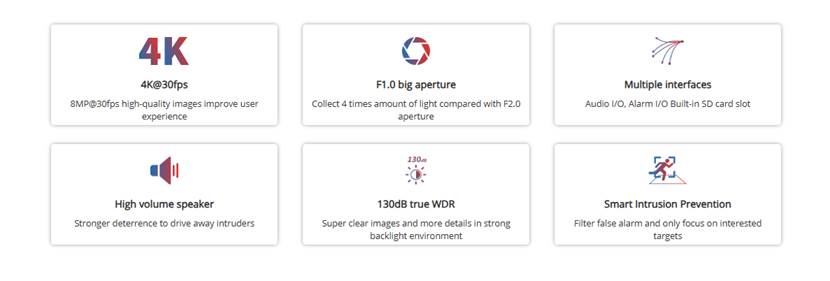
The knowledge base notes that the Prime II-I1 Tri-Guard 2.0 range supports an audio and alarm interface and can connect with third-party alarm platforms. It also lists 130dB True WDR and smart functions such as Smart Intrusion Prevention, Auto Scene Match, People Counting, and Color Retrieval. These are the kind of details a project buyer should check before choosing a model.
4MP is a practical level for many outdoor fixed bullet camera positions. It gives more detail than basic 2MP systems while keeping bandwidth and storage easier to manage than higher-resolution setups in every location. Small detail, but installers care about this when a site has dozens of cameras.
For project buyers, the final choice is not only about one camera. It also concerns product range, technical support, delivery capacity, and long-term service.
Unlimited New View has expanded from video security to broader AIoT product and solution fields, with product lines covering IPC, PTZ, NVR, storage, management software, display, access, and more. The company information also lists coverage across 200+ countries and regions, 21 overseas branch offices, and 20,000+ global partners. More details are available through the official company profile.
The broader technology portfolio gives you room to build more than a single camera point. For this topic, Tri-Guard_2.0 fits sites that need motion detection, intelligent event rules, and warning response together.
Outdoor CCTV projects often need model selection, site layout, configuration support, and after-sales help. The knowledge base describes pre-sale requirement analysis, solution design, product selection, installation guidance, remote debugging, on-site support, and after-sale service. For dealers and installers, the Dealer Partner Program and solutions by industry pages are useful next steps. The main global site can also guide product selection.
Q1: Should an outdoor CCTV camera trigger active deterrence for every motion event?
A: No. Use active deterrence for high-risk zones. Use motion alerts for public areas, normal traffic, and events that need review first.
Q2: Is active deterrence better than motion alerts?
A: Not always. Active deterrence is better for fast on-site warning. Motion alerts are better for review, records, and low-risk activity.
Q3: Why do outdoor motion alerts create false alarms?
A: Common causes include rain, insects, branches, headlights, poor angle, and simple motion rules that treat all movement the same.
Q4: Which product is suitable for outdoor warning and motion response?
A: IPC2B14SS-ADF28(40)KMC-I1 is a suitable option when a 4MP dual-light bullet camera with Tri-Guard capability is needed.
Q5: What should an outdoor CCTV camera do first?
A: In low-risk areas, it should alert first. In restricted outdoor zones, after-hours perimeters, or asset-heavy sites, active deterrence should come first.