
















Hello, your privacy is important to us. Uniview websites use cookies to store info on your device and create the most secure and effective website . By continuing to use our websites, please accept the cookies could be stored on your device, which outlined our cookie policy and privacy policy .






_1036463_651984_0.png)







 X
X
 GLOBAL / ENGLISH


Operating a commercial enterprise in 2026 requires strict budget management, especially when allocating funds for physical protection. Selecting the right CCTV Camera is a critical financial decision aimed at minimizing loss and maximizing operational efficiency. Buyers must evaluate hardware durability and intelligent capabilities to achieve a high return on investment. Relying on outdated equipment often leads to hidden expenses down the line. You need robust devices that actively protect your assets day and night without requiring constant human intervention.
Business owners frequently encounter specific operational obstacles that drain financial resources and reduce the overall effectiveness of their security deployments. Identifying these technological pain points serves as the critical first step toward building a highly efficient and economically viable system.
Deploying multiple conventional cameras to cover a single expansive area significantly increases initial purchasing expenses. Furthermore, relying on external lighting devices for night operations continuously drives up electricity bills and maintenance labor costs over time. Paying for a convoluted setup instead of a streamlined solution heavily impacts the bottom line of small operations.
Traditional security setups often experience severe performance drops during nighttime hours, producing grainy images and losing crucial color details. This hardware limitation renders the system nearly useless during high risk periods. Administrators simply cannot identify critical details like vehicle plates or clothing colors when incidents occur in the dark.
Without intelligent filtering algorithms, standard devices constantly trigger false alerts due to moving leaves, small animals, or heavy rain. Security personnel waste valuable hours responding to these invalid notifications. This creates a notoriously frustrating daily routine that severely diminishes the overall return on investment of the security infrastructure.
Overcoming these operational hurdles requires investing in robust hardware foundations. Buyers should prioritize specific physical components that directly dictate image quality and long term durability in rigorous commercial applications.
Hardware Component | Standard Specification | High ROI Specification | Performance Difference |
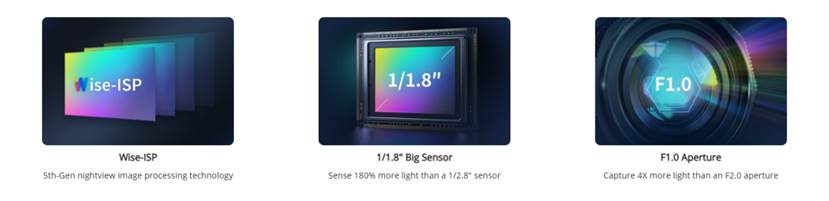
Image Sensor | 1/2.8 inch | 1/1.8 inch | Captures 180% more light |
Lens Aperture | F2.0 | F1.0 | Collects 4 times more light |
The physical size of an image sensor fundamentally dictates the amount of light a camera can process. For instance, a 1/1.8 inch sensor captures 180% more light than a standard 1/2.8 inch variant. This substantial increase in light gathering forms the absolute physical basis for superior night vision capabilities.
Aperture size works in tandem with the internal sensor to brighten remarkably dark scenes. An F1.0 ultra large aperture collects four times more light than a conventional F2.0 aperture. This specific specification is vital for maintaining bright, colorful footage in poorly lit environments without needing supplementary lights.
Industrial grade materials protect the initial investment from harsh weather conditions and physical impacts. Devices featuring IP67 water and dust proofing, along with metal housing and graphene front covers, offer 50% faster heat dissipation. These robust physical designs significantly extend equipment lifespan in extreme outdoor climates.
Superior physical components must operate alongside advanced algorithms to provide practical security data. Modern software turns raw video feeds into proactive business protection tools that actively reduce operational overhead. You can explore more about these foundational technologies to see how they integrate into modern commercial hardware.
Technology Feature | Traditional System Limitation | Modern Intelligent Solution |
Night Vision | Requires blinding LED lights | Full color images without LED activation |
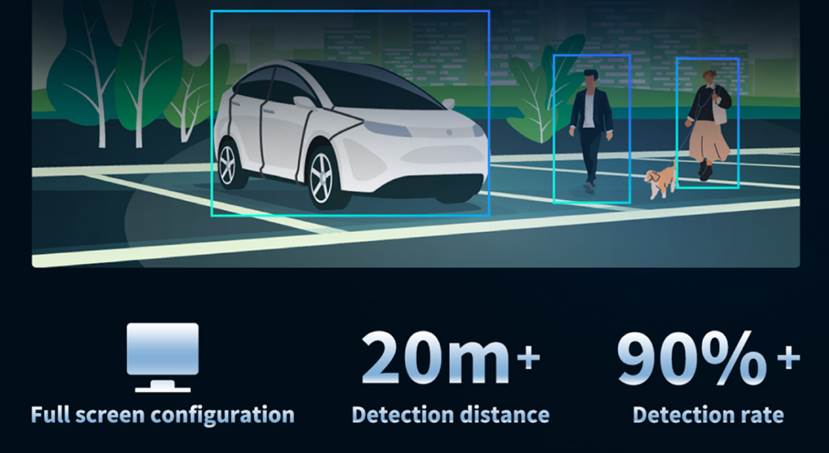
Alarm Accuracy | Triggered by weather or animals | Accurately classifies vehicles and pedestrians |
Backlight Handling | Subjects appear dark against windows | 130dB WDR balances sharp contrast areas |
Modern processing technology delivers full color images in ultra low light environments without activating bright LED lights. This innovative capability reduces local light pollution and preserves crucial color details, such as vehicle paint or jacket colors, even from afar. The fifth generation Wise-ISP image processing technology achieves this by producing color images at a minimum illumination of 0.0003 Lux.
Smart Intrusion Prevention algorithms accurately classify motor vehicles, non motor vehicles, and pedestrians. By filtering out environmental noise, this technology focuses alerts purely on genuine threats. You receive accurate notifications rather than a flood of useless warnings from stray animals or shaking trees.
Commercial spaces frequently deal with terrible lighting conditions, like bright glass storefronts blasting sunlight directly into the lens. A 130dB True WDR adapts to sharp contrast areas between light and dark environments. This function maintains facial clarity for individuals entering a building against strong background sunlight.
Deploying the correct CCTV Camera tailored to site requirements yields a strong financial return and operational peace of mind. Various industry solutions prove that adapting the setup to the specific environment is highly effective.
Retail shops face severe risks from nighttime break ins and storefront vandalism. Installing a high performance CCTV Camera with a built in microphone provides crucial visual and audio records for post event analysis. Additionally, WDR technology perfectly resolves the glare and backlight issues caused by daytime sun reflecting off glass display windows.
Storage facilities typically operate in expansive, dimly lit environments with high value goods. Utilizing large sensor cameras alongside crossline detection algorithms allows facility managers to guard valuable cargo continuously. The system instantly detects unauthorized access to restricted zones, actively preventing asset loss during overnight shifts.
Corporate campuses require strict perimeter defense to manage heavy personnel flow. Employing intelligent algorithms for precise vehicle classification enables highly efficient visitor management. This automated filtering drastically reduces the need for expensive manual security patrols around the property line.
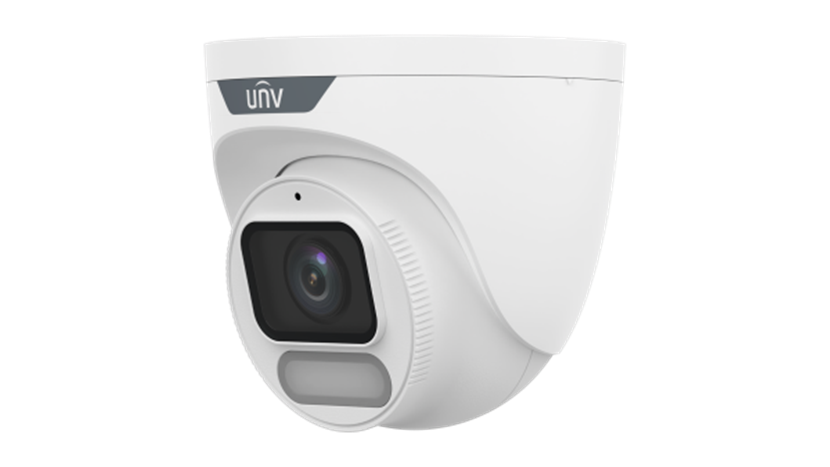
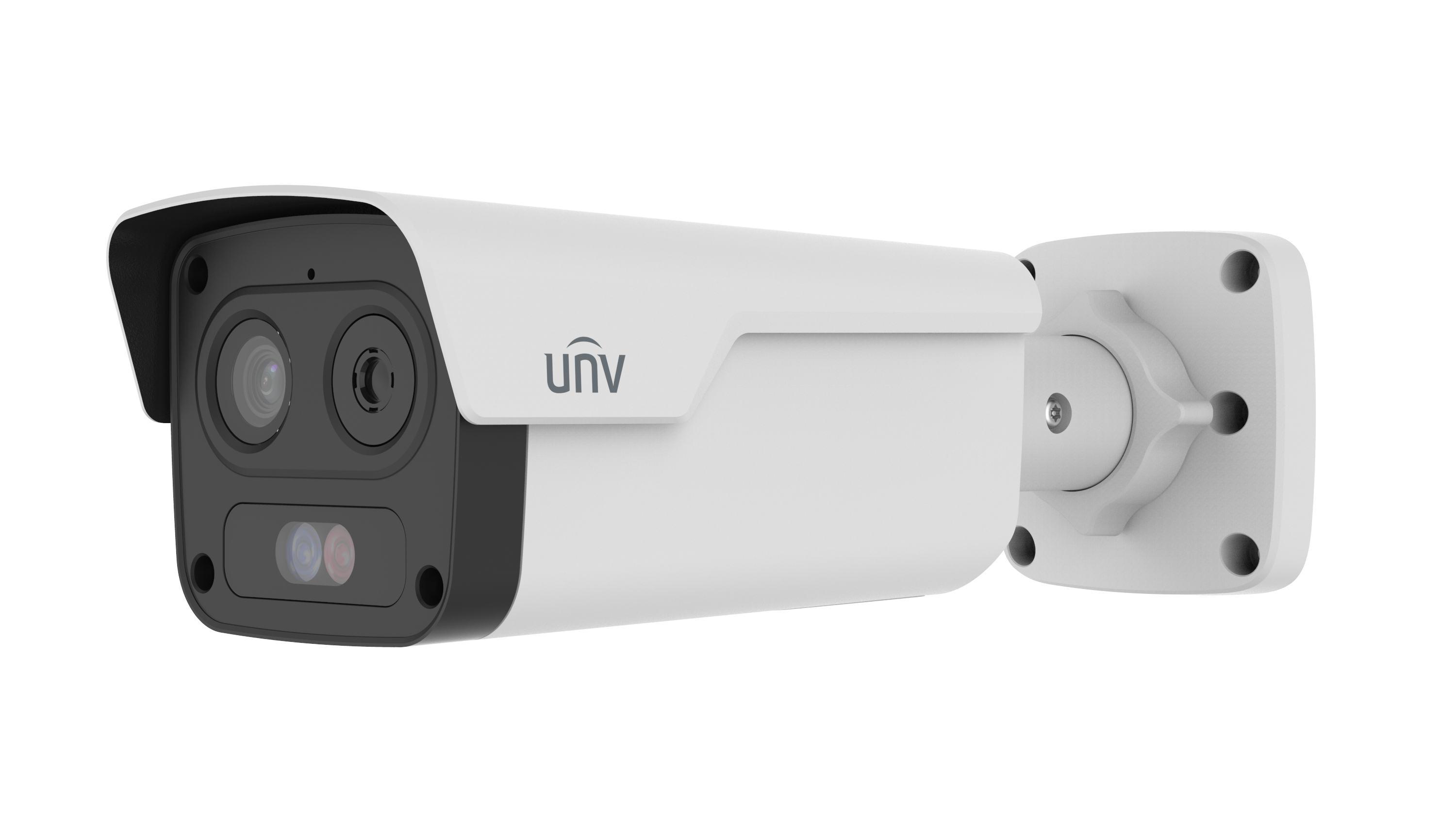
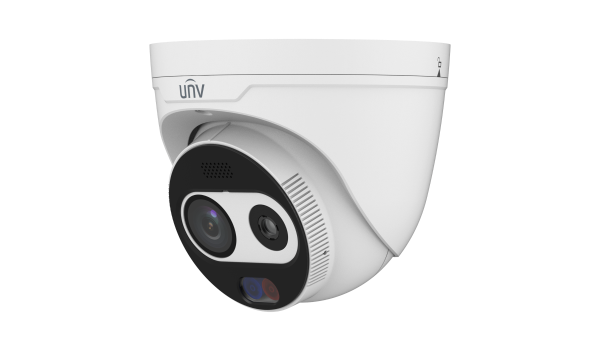
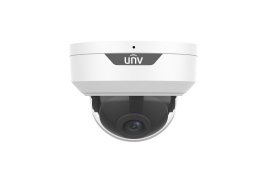
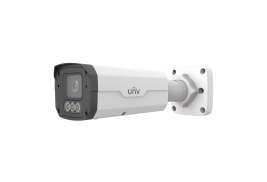
Addressing every requirement for hardware excellence and software intelligence requires a highly comprehensive product. The IPC3628LE-ADF28(40)K-WP model perfectly balances exceptional night vision with affordability for business owners. It is a prime example of how intelligent security hardware operates in the field.
This specific model utilizes advanced night vision image processing technology to deliver fantastic image quality even in poor illumination conditions. It effectively breaks the distance limitations of traditional supplemental lighting by maximizing available ambient light to construct a full color scene.
The camera houses an impressive 1/1.8 inch big sensor and an F1.0 large aperture. This top tier hardware combination guarantees maximum light collection. It remains highly effective for continuous, clear recording during the darkest hours of the night.
Beyond optics, this specific CCTV Camera features intelligent intrusion prevention and 130dB True WDR. It also includes a built in microphone for audio capture and an IP67 rating for water and dust proofing. These integrated capabilities make it an incredibly high ROI asset for rigorous commercial demands.
Securing a facility goes beyond purchasing a single CCTV Camera; it requires a reliable, long term manufacturing partner. The company behind these innovations, Unlimited New View, invests heavily in research and development to bring professional reliability to the commercial market. You can rely on a partner that delivers resilient, high performance systems across the globe.
As a global provider of intelligent products and solutions, the manufacturer holds a Top 4 global market share. With a presence in over 200 countries, the brand showcases a proven track record of delivering resilient, high performance systems for varied commercial sectors.
System integrators and distributors can expand their business scope through the official Dealer Partner Program. This program offers a reasonable price structure to secure integrator margins, various project incentives, and robust market protection policies.
Human resource localization has been realized in over 70 countries, supported by 21 overseas branch offices. Partners receive comprehensive support, ranging from pre sale solution design to remote debugging and a dedicated 24/5 service hotline for ongoing maintenance.
Q1: How many CCTV Camera units does a typical small business actually need?
A: The exact number really comes down to the shape of your floor plan and what you are trying to protect. Take a standard 2500 square foot retail shop, for example; you usually need solid coverage right at the main entrances, above the cash registers, and in the back stockroom. Instead of getting stuck on a magical number of lenses, just figure out the most vulnerable spots first. Grabbing a few wide angle units often cuts down the total equipment you have to buy, saving money without leaving huge blind spots in the corners.
Q2: What is the main financial benefit of upgrading to an F1.0 aperture lens?
A: An F1.0 lens pulls in about four times the amount of light compared to a basic F2.0 setup. In practical terms, this means the hardware can keep recording clear, colored footage even when an alleyway or parking lot is pitch black. You do not have to wire up and power a bunch of heavy external floodlights all night long. Dropping those extra lighting fixtures cuts a huge chunk out of the monthly power bill and saves the hassle of replacing burnt out bulbs every few months.
Q3: How do intelligent intrusion prevention algorithms reduce operational overhead?
A: Older camera models are notorious for buzzing the system every time a stray dog walks by or the wind blows a tree branch. It gets annoying fast. Modern algorithms actually sort the moving objects into specific groups, like cars, bikes, and real pedestrians. Because the software ignores random environmental stuff, whoever is watching the monitors does not suffer from alert fatigue. They only jump into action for actual security breaches, which strips away hours of wasted payroll dealing with false alarms.
Q4: What happens to video data if the local network connection fails during an incident?
A: Business grade setups normally use something called Automatic Network Replenishment technology to stop files from vanishing. If a storm knocks out the local connection or a cable gets unplugged, the camera just shifts gears and writes the video straight to a built in memory card. Later on, when the connection comes back to life, the hardware pushes all that missing footage over to the main network video recorder by itself. You end up with a complete timeline, missing zero seconds of action.
Q5: Are commercial camera systems capable of functioning reliably in harsh weather?
A: Tough environmental conditions are exactly what commercial hardware is designed to handle. As long as you pick units rated with an IP67 protection grade and a solid metal shell, they will easily survive brutal summer heatwaves or massive dust storms without frying the internal boards. It is a much better choice for exposed spots like a receiving dock or an open parking garage, where cheaper plastic gear tends to crack or leak after just one rough winter.