










Hello, your privacy is important to us. Uniview websites use cookies to store info on your device and create the most secure and effective website . By continuing to use our websites, please accept the cookies could be stored on your device, which outlined our cookie policy and privacy policy .


_1036463_651984_0.png)





 X
 GLOBAL / ENGLISH


The choice between resolutions is easier to make with a recording from the proposed position. Use the far gate, for example, and examine a vehicle as it passes through after dark. Is there enough detail for the intended job? If not, the answer might be a 4K night vision camera, but it could also be a different lens or mounting point. The distinction matters before purchase: a higher pixel count will not resolve every reason for a disappointing night image.
· Check the night clip as well as the 4K specification.
· Allow enough of the frame for the gate or other area that needs close examination.
· A still yard can conceal an unsuitable exposure; the trial needs movement too.
· The recorder, network and review display must support the chosen stream settings.
A 3840 x 2160 recording has about 8.3 million pixels available. Where they end up is the awkward part. A vehicle near the lens might fill a substantial part of the picture. At the other end of a wide yard, it occupies far less of that same picture. Both recordings can be 4K, but there is much less recorded information about the distant vehicle.
The gate recording needs a purpose. The site drawing should show the area of interest, rather than just a camera symbol with an arrow pointing across the yard. Otherwise it is easy to approve coverage of the right place without approving enough detail there.
Focus and exposure belong in that decision as well. Once an edge has been smeared by movement during capture, the recording has no sharp version of that edge to preserve. Glare can leave a similar gap in the useful information, while excessive noise reduction may smooth it away. These problems belong in the night vision camera selection discussion, while there is still an opportunity to change the proposed lens or position.
Suppose the gate is the only part of the yard that needs close examination. Giving it more of the frame may be a sensible use of the camera. The same choice would be questionable if the recording also had to show vehicles approaching from either side: tightening the view might remove exactly that activity. A wide lens has a legitimate job in such a setting. The difficulty comes from expecting its overview to serve as a close view as well.
With the proposed positions marked on the drawing, lay out the expected coverage from each lens. The gate and the approaches should be visible wherever the brief requires them. An overview and a close view may turn out to be two jobs. Enlarging the recording later does not change the position from which it was taken, or the proportion of the original frame occupied by the vehicle. Allowing for the required detail during installation is more dependable than expecting to find it during playback.
The first night recording can expose a compromise that was easy to miss during the day. A longer exposure collects more light and can make the empty yard look good. It also leaves more time for a moving vehicle to change position within a single exposure. Higher gain can brighten the picture with additional noise. Reducing that noise may in turn smooth away detail. The yard's static surfaces give only part of the evidence needed to judge those settings.
The conditions beside a minimum-illumination rating deserve as much attention as the number. Comparing one test made with IR operating against another in color without IR would tell little about their relative performance. Aperture and gain need checking too, along with any stated shutter setting. The near part of the yard and the far gate still need recording after dark, under the lighting scheduled for normal operation.
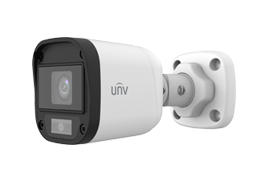
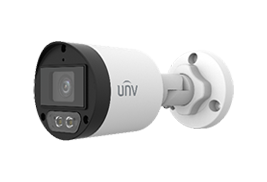
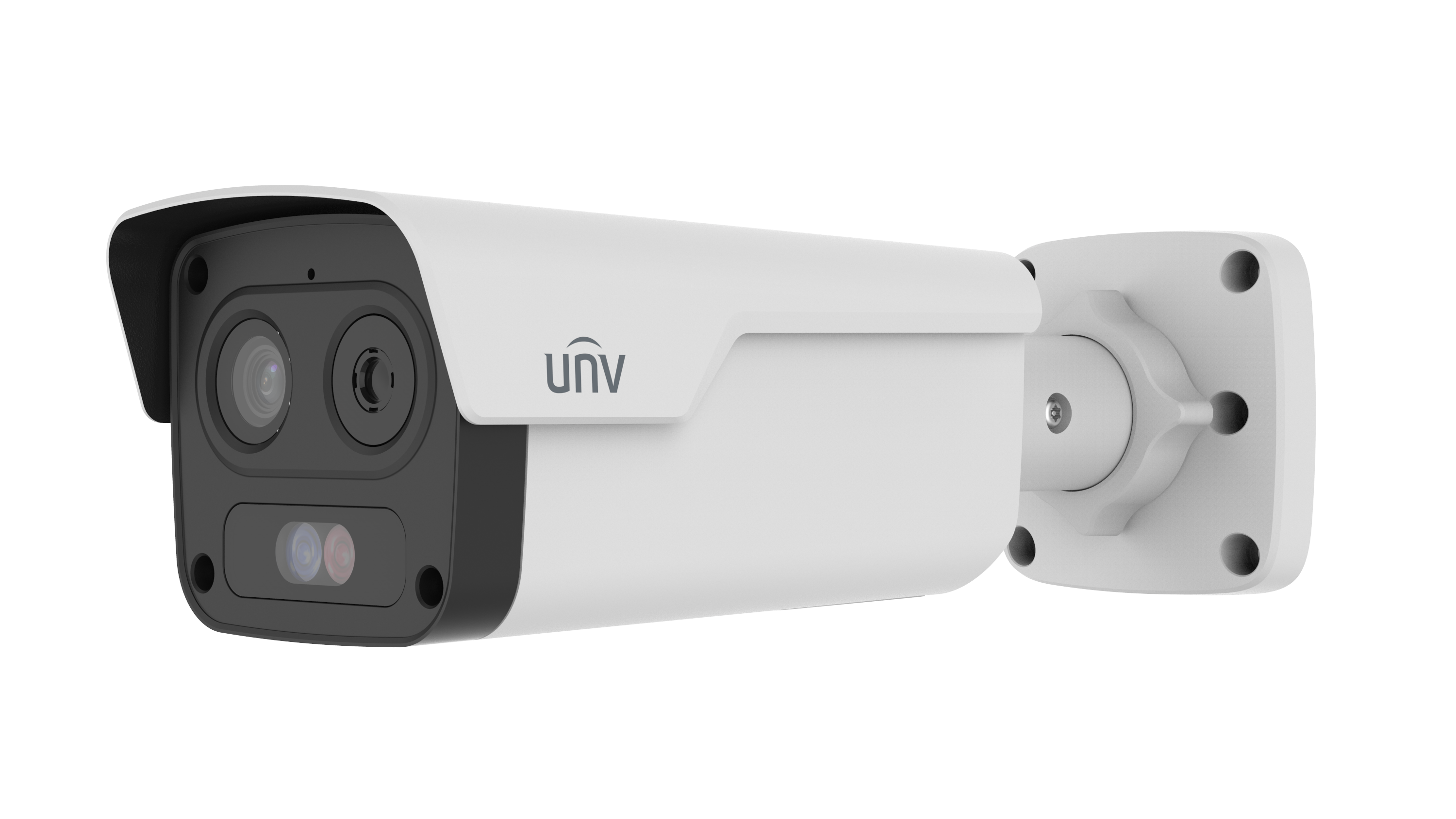
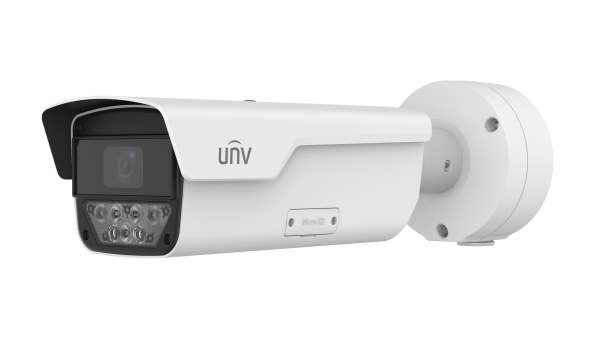
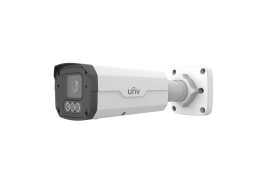
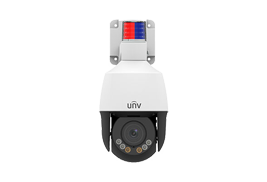
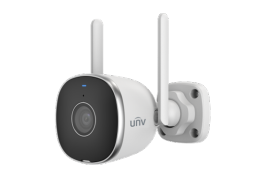
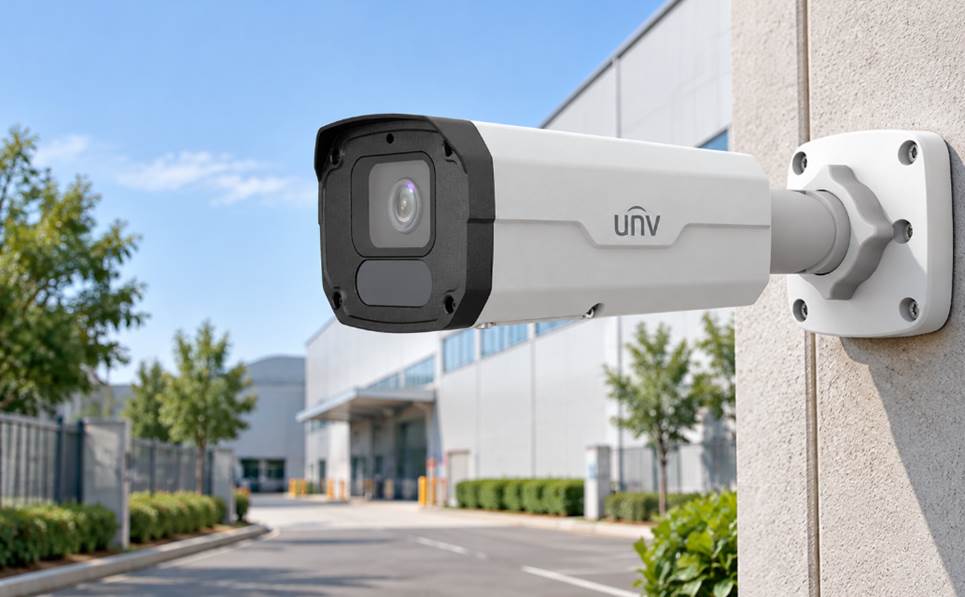
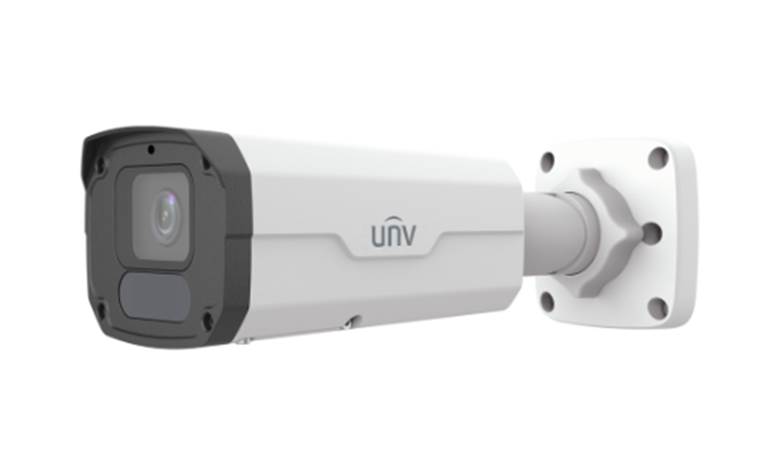
Uniview's UNV IPC2228SB-ADF28KM-I1 8MP LightHunter IR bullet camera provides a specific reference. For this model, the listed 4K stream is 3840 x 2160 at up to 30 fps. It has a fixed 2.8 mm lens, with an F1.6 aperture and 97-degree horizontal field of view. The color illumination rating, 0.002 lux, is stated at F1.6 with AGC on. IR illumination is listed at 80 m. That last figure should not become an acceptance distance for every visual task: the illumination may reach a target without the lens view providing enough detail for the job.
The motion trial needs to use the settings intended for everyday recording. There would be little value in approving a clip made at a shutter setting that will not be used after handover. Let the target pass through the relevant part of the view and play the recording back. If its edges smear while the paving stays sharp, more attention to exposure or lighting may be needed before a resolution upgrade will be useful. The best-looking paused frame is not necessarily representative of the whole passage.
IR is another reason to test from the actual mounting point. It may provide a useful monochrome picture where there is little visible light. Yet a reflective surface close to the lens can cause trouble even though the distant yard looks straightforward on a drawing. A wall, glass or metal beside the camera needs a check in the installed view. Rain and dust are further complications. The advertised IR distance offers no answer to a reflection caused by the particular position chosen for the camera.
Consider the entrance as well as the open yard. With bright light on one side of the doorway and much less on the other, the required detail may disappear in the darker area. More pixels do not by themselves resolve that contrast. Uniview specifies 120 dB WDR for this camera. Assess it with the expected direction of light, including the areas on both sides of the entrance that the recording must show. Night-vision technology and resolution need to be judged together here, against the doorway rather than a specification comparison alone.
Storage planning needs more than a camera count and an 8MP label. The proposed codec, frame rate and recording schedule should accompany the estimate. Scene activity and complexity affect the stream too. In particular, a capacity estimate based on one quiet daytime sample may be a poor representation of the intended night recording. Work from the settings that will actually be used, and allow the network and NVR to handle the resulting incoming load.
For this model, Uniview lists Ultra 265, H.265, H.264 and MJPEG compression, with a video bit-rate range extending to 16 Mbps. That upper limit is not a prediction of the average stream. An arbitrary lower figure is no better as a design assumption. In a 4K IP camera storage and compression plan, check the configured rate against recorded footage before settling the retention capacity. Changes to the recording settings should also be reflected in the calculation.
There are two recorder checks that should not be conflated. One concerns the resolution and frame rate accepted on an individual channel. The other concerns incoming bandwidth across all channels. A recorder also has to do the requested viewing and playback work, so decoding capacity belongs in the review. Saving 4K and displaying it are separate questions. On a lower-resolution monitor, the full frame is shown with fewer display pixels; the presence of the original recording does not change the monitor's resolution.
A satisfactory saved overview is a reasonable basis for choosing 4K. A disappointing one is a reason to find out what is missing before buying more of the same configuration. Perhaps the gate takes up too little of the picture, or the still image is clear but movement is blurred. Those observations point toward framing or exposure and lighting. A recorder limit needs a different remedy again. Spending on resolution makes sense only after the proposed system has shown that the additional detail is usable.
An acceptance record should contain more than a still image. Include:
· Daylight and after-dark recordings of the same target from the intended position.
· A moving target, recorded with the shutter and frame rate proposed for normal use.
· Views of the nearest and farthest required areas with IR operating, including any reflections.
· Live viewing, saved playback and an exported clip on the intended display.
· Recorder operation with the planned channel count and retention requirement.
A comparison needs notes, particularly when the cameras cannot be tested under identical conditions. Put the lens view, exposure, compression and display settings beside each saved clip. Note a different lighting condition or mounting position there too. Without that record, a closer view of the gate could easily be mistaken for an improvement due entirely to resolution.
Uniview supplies cameras and NVRs for installations of this kind. A proposal can be assessed more usefully when it includes the required view and retention period, the night lighting arrangements, and recordings from the trial.
Q1: Does a 4K night vision camera always provide a clearer night image?
A1: No. Take a vehicle that is blurred during exposure: adding pixels to that blurred image does not bring its edges back into focus. The same caution applies where there is too little light or too little of the frame devoted to the target. The saved night clip is the useful comparison.
Q2: Is 8MP the same as 4K?
A2: The two terms often describe the same camera stream. In particular, 3840 x 2160 is commonly sold as 4K UHD and appears on many 8MP models. Still check the dimensions and frame rate in the exact model's specification; the labels leave those operating details unresolved.
Q3: What should be checked before selecting a 4K camera for night use?
A3: Write down what must be visible and where. That requirement gives the installer a basis for checking the lens view, sensor and aperture, then testing exposure and illumination. IR coverage and WDR need attention where the scene calls for them. Approval should follow a trial from the proposed position.
Q4: Does an 80 m IR specification mean clear detail at 80 m?
A4: No. It concerns the reach of the IR illumination under stated conditions. A distant target may receive light yet remain too small in the image for close examination. Its reflectivity and the weather can affect the result too, as can the exposure used for the recording.
Q5: Can an existing NVR handle a new 4K camera?
A5: The answer is in the recorder's limits and the proposed settings. A connection may succeed while the required combination of resolution, frame rate and channel count still exceeds what the NVR supports. Check total incoming bandwidth, decoding, storage and the review display before approving the change.
Founded in 2011, Uniview is a global full-stack AIoT solutions provider empowered by core ABCI technologies. With a global layout and multi-brand strategy, it operates four professional brands including UNV, uniarch, Hopetrek and youkey, covering full-scenario demands of professional security, SMB security, smart new energy and smart home.