










Hello, your privacy is important to us. Uniview websites use cookies to store info on your device and create the most secure and effective website . By continuing to use our websites, please accept the cookies could be stored on your device, which outlined our cookie policy and privacy policy .


_1036463_651984_0.png)





 X
 GLOBAL / ENGLISH


The best night vision security camera is the one that keeps the required area readable under its real lighting, distance, weather, and recording conditions. Start with the scene and the evidence you need, then match low-light imaging, infrared range, lens coverage, WDR, housing, and NVR storage. A camera selected only by resolution or an advertised distance can still produce dark faces, glare, or unusable detail.
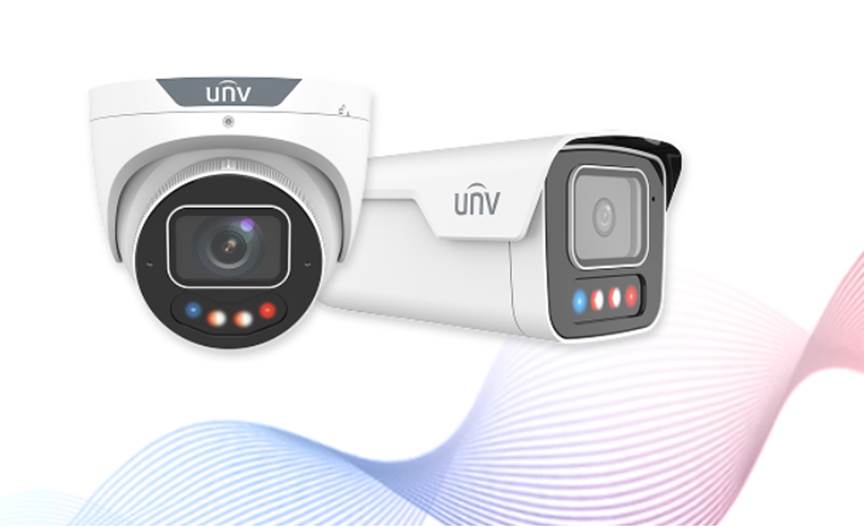
l Define the night-time task first: general awareness, vehicle movement, a doorway, loading-bay activity, or readable package labels.
l Compare low-light imaging and infrared performance with a site test. The quoted infrared range is a reference, not a guarantee for every scene.
l Check lens angle, mounting height, WDR, illumination, weather protection, and NVR bitrate as one system.
l Before a bulk order, test the camera at the farthest target, at the darkest hour, and during a lighting change.
Security camera selection becomes clearer when the buyer writes down the required observation rather than starting with a model list. A warehouse perimeter may need motion awareness across a wide zone. A staff entrance may need a stable view of a person approaching the door, while a loading bay may need vehicle direction and pallet movement. These are different image tasks and may require different lenses or mounting positions.
Record four site facts: the farthest useful target, the height and angle of installation, available ambient light, and the recording period that must remain searchable. Also note reflective surfaces such as white walls, metal doors, wet floors, and glass. They can return infrared energy into the lens and create a bright foreground with a dark background.
A night vision security camera may use infrared illumination, available-light enhancement, or a combination of both. Infrared night vision produces a monochrome image when visible light is insufficient. A low light security camera can preserve more scene information when there is enough ambient light, but performance depends on exposure time, lens aperture, sensor sensitivity, and movement in the scene.
For a site with changing light, ask the supplier to demonstrate three conditions: ordinary night lighting, near-darkness, and a sudden light source such as vehicle headlights. Review whether moving subjects remain defined, whether highlights clip, and whether noise hides small details. Do not accept a daytime sample as evidence of night performance.
Selection factor | What to check | Why it matters at night |
Low-light imaging | Sensor response, noise control, exposure behavior, and motion clarity | A bright image is not useful if moving targets smear or noise removes edges. |
Infrared range | Reference distance, IR angle, target reflectivity, and test conditions | Range changes with scene color, weather, mounting angle, and whether the target fills the frame. |
Lens and field of view | Focal length, target width at the far point, and blind spots | A wide view covers more area but gives fewer pixels to a distant target. |
WDR and lighting contrast | Backlit entrance, headlights, glass, and strong indoor/outdoor contrast | WDR helps retain detail when dark and bright areas appear in the same frame. |
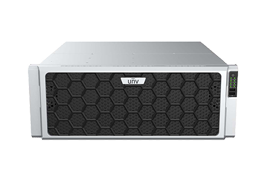
Recording system | NVR channel capacity, codec, bitrate, retention, and time synchronization | A strong live image still fails as evidence if recording is incomplete or overwritten too soon. |
Installation and housing | Mounting height, vibration, water exposure, cleaning access, and cable route | A dirty dome, vibration, or condensation can degrade night images more than the camera specification suggests. |
“How far can it see?” is not the same as “How far can it identify a useful event?” Infrared range describes illumination or detectable scene reach under stated conditions. The useful distance also depends on pixels on target, lens selection, mounting geometry, contrast, and subject movement. A camera installed too high may see a person but lose the face and clothing detail needed for an incident review.
Use a simple commissioning check: mark the farthest target location, capture a still image in the darkest expected condition, and review it at the same display size used by operators. Repeat with a moving person or vehicle. Confirm that the target remains inside the intended field of view after seasonal changes, gate movement, or landscaping.
WDR is especially important at entrances where indoor areas are darker than the exterior. Uniview source material describes 120 dB WDR as useful for clearer viewing in scenes with strong inside/outside contrast. Treat that figure as a product-level capability to confirm on the selected model, then test the actual doorway because glass, overhangs, and headlight direction change the result.
Two field mistakes appear often. First, installers aim the camera directly at a light source and then compensate with settings, leaving the rest of the scene underexposed. Second, they mount a camera beside a wall or soffit that reflects infrared into the lens. Adjust the angle, shade the lens from direct light, and clean the protective window before judging image quality.
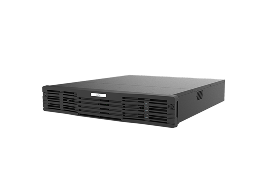
Night images can consume more storage when noise, motion, or high bitrate settings increase the data stream. Size the NVR around the number of channels, frame rate, resolution, recording schedule, and retention requirement. Confirm how motion recording handles pre-event and post-event time, and check that camera and NVR clocks stay synchronized.
IP cameras are commonly used with NVRs in Uniview systems, and the UNV-Link mobile app can provide a practical way to review connected devices. Ask the integrator to demonstrate live view, playback, export, user permissions, and recovery after a network interruption. This test is more useful than a feature list because it reveals workflow gaps before handover.
Uniview provides IP cameras, NVRs, displays, and related solutions for commercial and industrial projects. Buyers can review the official Uniview product range, then ask a local partner to map the selected camera to the lens, recorder, mounting hardware, and display workflow. Keep the request specific: include a site sketch, night photographs, target distances, lighting changes, retention days, and the required review task.
For practical product and solution updates, the Uniview blog is another verified source to review alongside the project specification.
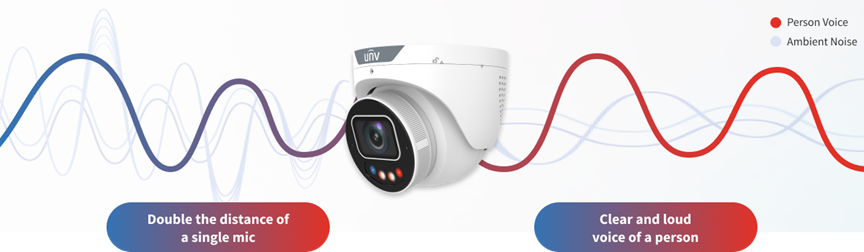
l Request a night sample from the farthest target, not only a close daytime sample.
l Confirm the selected lens and mounting height with a field-of-view drawing.
l Test WDR at the real entrance or gate with headlights and interior lighting active.
l Verify IR behavior around glass, white walls, wet surfaces, and reflective metal.
l Confirm NVR retention, export format, time synchronization, and network recovery.
l Record the cleaning interval and replacement process for the lens window or dome.
Review the official Uniview site for the current product reference, then contact Uniview. Send the site sketch, night photographs, target distances, mounting positions, lighting changes, retention period, and required evidence task to a Uniview partner for a model-specific camera and recorder proposal.
There is no single number. Start with the required night task, then verify low-light imaging, lens coverage, infrared range, WDR, and recording behavior at the site.
No. Higher resolution helps only when the lens, light, bitrate, storage, and mounting position preserve useful detail. A lower-resolution camera with better scene coverage can be more effective for a wide perimeter.
Test the farthest target during the darkest expected period, include movement and a lighting change, review the recorded clip on the intended display, and document the mounting and settings used.
Choose the camera that produces usable recorded evidence in your hardest night scene, not the model with the longest headline range. A short site trial covering low-light imaging, infrared behavior, WDR, lens coverage, NVR playback, and maintenance access will expose most selection errors before they become installation costs. Ask the supplier to confirm every model-specific specification against the final quotation and test report.
2026-10-13
Topic:

2026-10-13
Topic:
2026-09-28
Topic:


